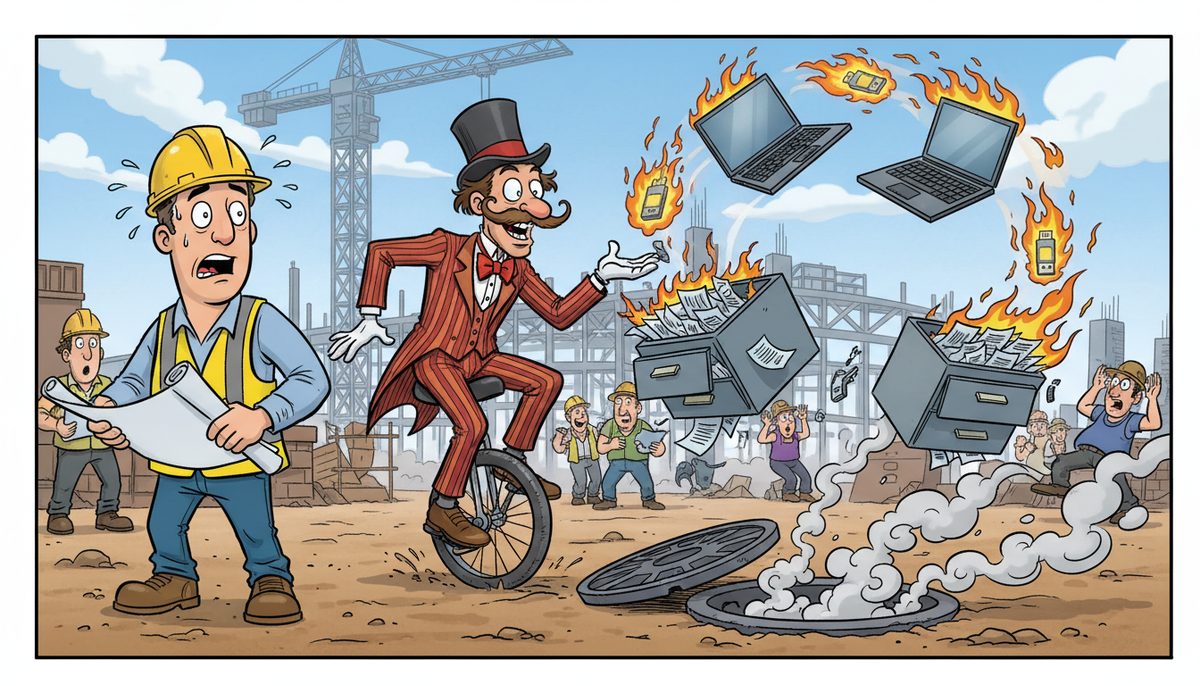
Managing third-party vendor security risks requires a structured assessment process that evaluates vendors before onboarding and monitors them continuously. Engineering firms should implement a risk classification system, require security documentation from all vendors handling sensitive data, and conduct quarterly reviews of vendor access privileges. 63% of data breaches originate from third-party vendors, making this oversight critical for firms managing CAD files, project data, and client specifications.
Why are engineering firms particularly vulnerable to vendor security breaches?
Engineering firms handle extraordinarily valuable intellectual property. CAD drawings, structural calculations, proprietary designs, and client specifications represent years of development work. When vendors access your systems to provide software, cloud storage, or specialized tools, they create potential entry points for data theft or ransomware.
The engineering workflow compounds this risk. Your teams collaborate with contractors, subconsultants, materials suppliers, and software vendors daily. Each connection multiplies your attack surface. A compromised vendor account can expose project files across multiple clients.
Regulatory requirements add another layer. Engineering firms working on government contracts, critical infrastructure, or healthcare facilities must comply with specific security standards. Your vendor’s security failure becomes your compliance violation.
Bahig from an engineering firm experienced how vendor relationships affect security: “DataStream always answers the phone and responds quickly! From our existing IT provider we experienced issues with unclear billing, changing staff on our account, and felt we weren’t receiving good service. We decided to switch to DataStream and they did a full network assessment, network repair, and vastly simplified and streamline our computer systems.”
The specialized software engineering firms use creates unique dependencies. You can’t simply switch CAD platforms or structural analysis tools without massive disruption. This lock-in gives vendors significant leverage and makes security vetting essential before commitment.
What should I evaluate during vendor security assessments?
Start with vendor classification. Not every vendor poses equal risk. A janitorial service needs different scrutiny than a cloud hosting provider storing your entire project archive. Create three tiers: critical (direct access to sensitive data), moderate (limited system access), and low (no digital access).
For critical vendors, request their SOC 2 Type II reports, ISO 27001 certifications, or equivalent third-party security audits. These documents prove they’ve implemented security controls and undergone independent verification. Don’t accept marketing materials claiming they’re “secure” without evidence.
Examine their data handling practices specifically. Where do they store your files? Who can access them? How do they encrypt data in transit and at rest? What happens to your data if you terminate the relationship? Engineering project files often remain valuable for decades, so data retention and destruction policies matter.
Review their incident response plan. Ask how quickly they’ll notify you of a breach. Request examples of past security incidents and their resolution. Vendors who’ve never had incidents either have excellent security or aren’t detecting problems.
Assess their access controls. Will they use multi-factor authentication? Can you restrict access to specific employees? How do they manage credential sharing? The vendor’s internal security hygiene directly affects your exposure.
Check their business continuity plans. If ransomware hits their systems, how quickly can they restore service? Your project deadlines don’t pause for vendor recovery.
Vendor security assessment must happen before contract signing, not after implementation.
How do I implement ongoing vendor security monitoring?
Initial assessments capture a moment in time. Continuous monitoring catches deteriorating security posture. Schedule quarterly vendor reviews where you re-examine access logs, security updates, and compliance status.
Implement automated monitoring for vendor access to your systems. Your security solutions should log every vendor connection, flag unusual access patterns, and alert you to after-hours activity. Review these logs monthly at minimum.
Require vendors to notify you of security incidents within 24 hours, even if your data wasn’t directly affected. A breach at their organization signals potential vulnerabilities in systems you’re using.
Conduct annual security questionnaires with all critical vendors. Technology and threats evolve rapidly. Last year’s acceptable security may be inadequate today. Ask about new certifications, infrastructure changes, and security investments.
Monitor vendor financial health. A struggling vendor may cut security staff, delay patches, or become an acquisition target. Any of these scenarios changes your risk profile.
Test vendor response times periodically. Submit support tickets that require security-related actions. Measure how quickly they respond and whether they follow proper verification procedures before granting access.
Engineering firms should review vendor access privileges quarterly and remove unnecessary permissions immediately.
Build vendor security metrics into your overall security dashboard. Track the number of vendors with system access, percentage with current security certifications, and average time to patch critical vulnerabilities. These metrics reveal trends before they become crises.
What contractual protections should engineering firms require?
Contracts create enforceable security obligations. Include specific security requirements in every vendor agreement, not vague promises to “maintain reasonable security.”
Essential contractual security provisions include:
- Breach notification within 24 hours of discovery, specifying nature of breach, data affected, and remediation steps
- Right-to-audit clauses allowing annual security control reviews or post-incident assessments
- Explicit data ownership stating all project files, designs, and client data remain your property
- Liability provisions holding vendors financially responsible for security failures beyond standard contract value limits
- Data deletion requirements mandating removal of all your data within 30 days of contract termination with written certification
- Cyber insurance coverage requirements with annual certificate of insurance
- Acceptable use policies prohibiting subcontracting without approval, foreign access from weak data protection jurisdictions, or credential sharing
Many standard vendor contracts allow 30-90 day breach notification windows that leave you exposed. Negotiate these terms before signing.
Working with local Vancouver Island providers through co-managed IT arrangements often provides more flexibility in negotiating these protections than large national vendors with take-it-or-leave-it contracts.
How do I balance security requirements with vendor relationships?
Security requirements can strain vendor relationships if implemented poorly. Small vendors may lack resources for extensive compliance documentation. Specialized engineering software vendors may resist security audits.
Tier your requirements based on actual risk. A niche structural analysis software vendor with read-only access to specific project files needs different scrutiny than a cloud backup provider storing your entire file server.
Offer assistance to valuable vendors who lack security maturity. If a specialized consultant provides irreplaceable expertise but has weak security practices, help them improve rather than immediately terminating the relationship. Provide security training resources or connect them with security consultants.
Communicate the business case clearly. Explain that security requirements protect both parties. A vendor involved in a client breach faces reputation damage and potential lawsuits. Security measures serve their interests too.
Start security conversations early in vendor selection. Don’t surprise vendors with extensive security questionnaires after they’ve invested time in proposals. Include basic security requirements in RFPs so vendors self-select appropriately.
Recognize that perfect security doesn’t exist. Risk management means accepting some risk while mitigating the most dangerous exposures. A vendor with 95% of required controls may be acceptable if the gaps are in lower-risk areas.
Build security improvement into contracts. If a vendor lacks specific controls today, create a timeline for implementation. A 90-day security improvement plan with milestones demonstrates commitment without requiring immediate perfection.
Maintain vendor diversity for critical functions. Relying on a single vendor for essential services creates both security and business continuity risks. Having qualified alternatives reduces individual vendor leverage.
What role does employee training play in vendor security?
Your employees are the enforcement mechanism for vendor security policies. Without proper training, even excellent policies fail in practice.
Train staff to recognize vendor impersonation attempts. Attackers frequently pose as IT support or software vendors to gain access. Employees should verify vendor identity through established channels, never through contact information provided in unexpected emails or calls.
Establish clear procedures for granting vendor access. Employees shouldn’t be able to give vendors system access without IT approval. Every vendor connection should be logged, time-limited, and monitored.
Educate teams about data classification. Staff need to understand which project files can be shared with which vendors. A materials supplier doesn’t need access to structural calculations, even if they’re working on the same project.
Implement regular security awareness training that includes vendor-specific scenarios. Generic phishing training misses engineering-specific risks like fake software update notifications or compromised vendor file-sharing links.
Create simple reporting mechanisms for suspicious vendor behavior. If a vendor requests unusual access, asks for credentials they shouldn’t need, or pressures employees to bypass security procedures, staff should report it immediately.
Practice vendor security incident response. Run tabletop exercises where a vendor breach compromises your systems. These exercises reveal gaps in communication, decision-making authority, and technical response capabilities.
Vendor security training should happen during onboarding and at least annually thereafter.
Frequently asked questions
How often should I re-evaluate vendor security controls?
Conduct comprehensive vendor security reviews annually for all critical vendors and quarterly for vendors with administrative access to your systems. Continuous automated monitoring should track vendor access patterns daily. Request updated security documentation whenever vendors make significant infrastructure changes, experience leadership turnover, or undergo mergers and acquisitions that might affect their security posture.
What’s the minimum security documentation I should require from vendors?
At minimum, require proof of cyber insurance, current security certifications relevant to their industry, documented data encryption practices, and a written incident response plan. For vendors handling sensitive engineering data, also request penetration testing results, employee background check policies, and multi-factor authentication implementation proof. These documents establish baseline security competence before granting system access.
Should I require the same security standards from all vendors?
No, implement risk-based vendor classification. Vendors with direct access to sensitive project files, administrative system access, or client data require stringent security controls and extensive documentation. Vendors providing services without digital access need basic security hygiene verification only. This tiered approach focuses resources on the highest-risk relationships while avoiding unnecessary burden on low-risk vendors.
How do I handle vendors who refuse security assessments?
First, clarify whether their refusal stems from legitimate concerns or lack of security maturity. Offer to sign mutual NDAs protecting their proprietary security information. If vendors still refuse reasonable security verification, evaluate whether alternatives exist and the risk of proceeding without assessment. For critical services with no alternatives, consider third-party security validation or enhanced monitoring to compensate for limited visibility.
What should I do immediately after discovering a vendor security breach?
Immediately revoke the vendor’s access to your systems and data. Assess what information they could access and notify affected clients if required by regulations or contracts. Document all communications with the vendor about the breach. Engage your incident response team to determine if the breach affected your systems. Review contracts for breach notification and liability provisions, then consult legal counsel about potential claims and regulatory reporting obligations.