
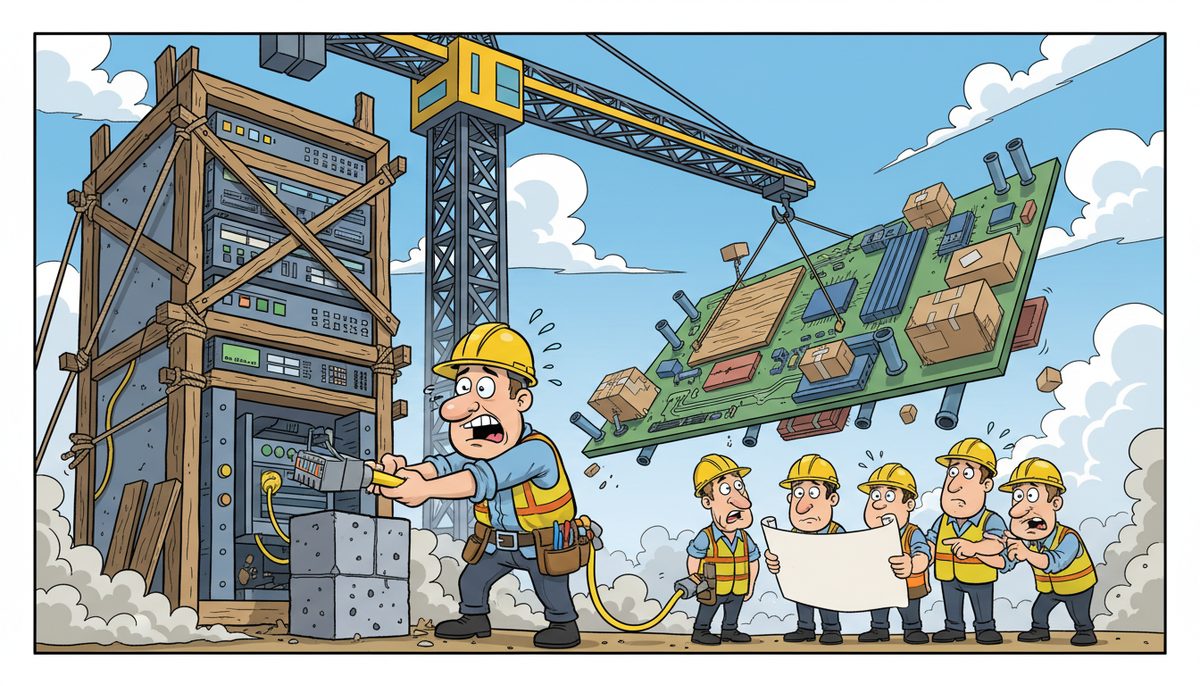
The top 5 IT companies globally by market capitalization are Microsoft, Apple, Alphabet (Google), Amazon, and Meta (Facebook), with combined valuations exceeding $10 trillion USD. These technology giants dominate consumer software, cloud infrastructure, and enterprise platforms. For Victoria construction businesses, the “top” IT company is one that understands job site coordination, WorkSafeBC digital reporting, and BC Builders Lien Act documentation requirements with local technicians who can arrive on-site when remote support isn’t enough.
What defines a “top” IT company for your business needs?
Global rankings measure market capitalization and revenue, but construction firms on Vancouver Island need different criteria. A top IT company for your business answers the phone immediately when your estimating software crashes hours before a tender deadline, not one with the largest stock price.
The world’s largest tech companies excel at consumer products and massive enterprise deployments. Microsoft provides Office 365 and Azure cloud services. Apple manufactures devices. Alphabet powers search and advertising. Amazon runs AWS infrastructure. Meta operates social platforms.
None of these companies will dispatch a technician to your Victoria job site when your project management system fails during a critical submittal review. They don’t understand that BC’s Freedom of Information and Protection of Privacy Act (FIPPA) governs your public sector construction projects, requiring specific data handling protocols.
For construction businesses, “top” means rapid response when systems fail, understanding of industry-specific software like estimating and takeoff tools, and technicians who know the difference between a site office and a superintendent’s mobile setup.
Construction companies lose an average of $1,600 per hour when estimating systems are offline during active bidding periods.
Luigi Mansueti from a Victoria construction company experienced this firsthand: “Our systems were running slow in the past. DataStream installed a new backup system, provided security for our network, and established a roadmap for future projects. DataStream thoroughly cleaned our file sharing, implemented password control, and smoothly transitioned us to take back control of our network.”
The right IT partner understands your operational reality, not just technology trends.
How do global IT giants compare to local managed service providers?
The five largest technology companies operate at a scale that makes direct small business support impractical. They sell through resellers, partners, and self-service portals. When your crew can’t access daily reports from a rural Vancouver Island job site, you need someone who answers immediately.
| Company Type | Primary Focus | Support Model | Construction Industry Knowledge |
|---|---|---|---|
| Global Tech Giants | Consumer products, cloud platforms, advertising | Self-service portals, tiered support queues | Generic enterprise solutions |
| National MSPs | Multi-location enterprises | Call centers, ticket systems | Limited vertical specialization |
| Vancouver Island Local Providers | Small to mid-size businesses | Direct phone access, on-site dispatch | Job site coordination, BC regulatory requirements |
Microsoft won’t help you configure your construction management software to comply with WorkSafeBC’s digital incident reporting requirements. Amazon Web Services provides infrastructure, but won’t troubleshoot why your field staff can’t sync time and materials reports from Cobble Hill job sites with limited cellular connectivity.
Local managed service providers focus exclusively on keeping your operations running. They understand that a change order system failure during client meetings damages relationships and delays progress billing. They know that retention holdback calculations require reliable document management systems.
For Victoria construction firms working on heritage building renovations with extensive documentation requirements or seismic upgrades mandated by BC Building Code, you need IT support that understands these local realities. Construction-focused IT services address industry-specific challenges like coordinating between island job sites and mainland suppliers when connectivity is unreliable.
Scale matters less than responsiveness when your estimating team needs systems restored before a 2 PM bid submission deadline.
What IT capabilities do construction companies actually need?
Construction businesses require technology infrastructure that supports field operations, office coordination, and regulatory compliance. Your IT systems must handle as-builts documentation, shop drawings distribution, and RFI tracking while crews work across multiple sites.
Data backup and recovery become critical under BC’s Builders Lien Act, which imposes strict documentation timelines. Missing a lien filing deadline because backup systems failed can cost tens of thousands of dollars on a single project. Automated backup systems with verification testing ensure you can recover project files, contracts, and correspondence when hardware fails.
Security solutions protect sensitive bid information, client data, and financial records. Construction firms increasingly face ransomware attacks targeting project schedules and payment information. Cybersecurity measures prevent unauthorized access to submittal documents and progress billing systems.
Help desk services resolve issues immediately when field staff can’t access daily reports or project managers lose connection to BIM systems during coordination meetings. Problems that take hours to resolve can delay substantial completion inspections or deficiency list walkthroughs.
Business phone services ensure subcontractors, clients, and suppliers can reach your team regardless of location. When your superintendent is moving between Duncan and Nanaimo job sites, reliable communication systems prevent missed RFIs and change order approvals.
Daryl Wood from the construction industry explains the stakes: “Considering all the cyber threats facing businesses today, you have to ask, what happens if your systems go down and you can’t operate for several days? If this would cause you big problems, I’d suggest protecting yourself by selecting DataStream as your security partner and get some peace of mind knowing they have it covered.”
Construction operations can’t tolerate multi-day outages when projects have fixed completion dates and liquidated damages clauses.
Why does local IT support matter for Vancouver Island construction firms?
Vancouver Island’s geography creates unique technology challenges. Construction companies coordinate between Victoria head offices, job sites in Nanaimo, supplier relationships on the mainland, and rural projects near Duncan where cellular connectivity is inconsistent.
When remote support can’t resolve a server failure at your site office, you need technicians who can reach your location within the same day. A Victoria-based provider with technicians across the island responds faster than national companies dispatching from Vancouver or Calgary.
Local providers understand BC-specific requirements. Public sector construction projects must comply with FIPPA for data privacy. WorkSafeBC mandates digital safety program documentation and incident reporting. The BC Building Code requires specific documentation for seismic upgrades and heritage renovations common in Victoria’s institutional and residential markets.
Island construction firms often work on university expansions, hospital renovations, and government buildings with enhanced security requirements. Your IT provider needs to configure systems that meet public sector procurement standards while maintaining accessibility for field staff.
Response time determines whether a system failure is a minor inconvenience or a project-delaying crisis. Victoria IT support with local technicians means someone can be on-site within hours when remote resolution isn’t possible, not waiting days for a technician to travel from the mainland.
Starting in 2012, DataStream Networks has focused exclusively on providing reliable IT service across Vancouver Island, with technicians in Victoria, Nanaimo, Duncan, and Cobble Hill. This local presence ensures construction firms receive support that understands both technology and the regional construction market.
Geography shouldn’t determine whether your business can operate effectively.
How much should construction companies budget for IT services?
IT service costs vary based on team size, system complexity, and service level requirements. Construction firms typically need comprehensive support covering help desk services, data backup, security, and infrastructure management.
Managed IT services that include proactive monitoring, help desk support, security management, and strategic planning typically range from $150–$225 per user per month. For a construction company with 15 employees (project managers, estimators, office staff, and field supervisors with mobile access), this represents $2,250–$3,375 monthly.
Data backup services protect project documentation, contracts, and financial records. Cloud or offsite server backup costs $40–$150 per user per month, ensuring you can recover critical files if ransomware encrypts your systems or hardware fails during a major project.
Cybersecurity protection has become essential as construction firms increasingly face targeted attacks. A cybersecurity suite including endpoint protection, email security, and threat monitoring costs $40–$100 per user per month. This investment prevents the average $200,000+ cost of a successful ransomware attack.
Co-managed IT services, where your existing IT staff works alongside external experts, cost $50–$150 per user per month. This model works well for larger construction firms with internal IT personnel who need specialized support for complex projects or security initiatives.
One-time projects like compliance assessments for public sector bidding or network infrastructure upgrades vary based on scope. Gap analysis and readiness assessments range from $2,500–$10,000, helping you identify vulnerabilities before they cause operational disruptions.
Budget for IT services as operational insurance: the cost of prevention is substantially lower than the cost of recovery after a system failure during a critical project phase.
What makes an IT company reliable for time-sensitive construction operations?
Construction deadlines don’t accommodate IT delays. When your estimating system crashes three hours before a tender submission, you need immediate resolution, not a ticket queue or callback promise.
Reliable IT companies answer phones with live people, not voicemail systems or phone trees. When your project manager can’t access submittal tracking during a client meeting, waiting on hold wastes billable time and damages professional credibility.
Most problems should be resolved remotely within minutes through direct technician access to your systems. Remote support tools allow technicians to diagnose issues, restore backups, and reconfigure software without travel delays. When remote resolution isn’t possible, automatic on-site dispatch ensures a technician arrives quickly.
Proactive monitoring identifies problems before they cause outages. Server monitoring detects failing hard drives, alerts to unusual network activity that might indicate security breaches, and tracks backup completion to ensure recovery systems will work when needed.
Local technicians across Vancouver Island mean faster on-site response for hardware failures, network infrastructure issues, or site office setup for new projects. A technician based in Nanaimo reaches your mid-island job site faster than one traveling from Vancouver.
Construction firms can’t afford IT providers who treat support as a cost center rather than a critical service. Your technology infrastructure directly affects your ability to bid competitively, manage projects efficiently, and maintain client relationships.
Reliable IT support eliminates the frustration of unanswered calls and unresolved problems that plague construction operations.
Frequently asked questions
What are the 5 biggest IT companies in the world?
The five biggest IT companies by market capitalization are Microsoft, Apple, Alphabet (Google), Amazon, and Meta (Facebook). These technology giants dominate consumer electronics, cloud computing, enterprise software, e-commerce, and social media platforms. Their combined market value exceeds $10 trillion USD, making them the most valuable corporations globally. However, their scale focuses on mass-market products rather than direct small business IT support services.
Do construction companies need the same IT services as other industries?
Construction companies have unique IT requirements including mobile device management for field staff, project management software integration, job site connectivity solutions, and compliance with WorkSafeBC digital reporting requirements. They need rapid response times because project deadlines are fixed, and system failures can delay progress billing, submittal approvals, or bid submissions. Construction-specific backup systems must protect documentation required by BC’s Builders Lien Act with strict timeline requirements.
How quickly should an IT company respond to construction business emergencies?
Construction IT emergencies require immediate phone access to live technicians who can begin troubleshooting within minutes, not hours. Most problems should be resolved remotely within minutes through direct system access. When on-site support is necessary, technicians should arrive the same business day for critical issues affecting bidding, project coordination, or client deliverables. Multi-hour delays can cause missed tender deadlines or progress billing disruptions.
What IT security risks do construction companies face on Vancouver Island?
Construction firms face ransomware attacks targeting project schedules and payment systems, phishing attempts stealing bid information, and data breaches exposing client information from public sector projects governed by FIPPA. Job sites with temporary network setups create security vulnerabilities. Mobile devices used by field staff need endpoint protection. Email systems require spam filtering to prevent malware distribution. Cybersecurity suites with managed detection and response services provide comprehensive protection.
Can small construction companies afford professional IT support?
Professional IT support is scalable to business size and budget. Managed IT services cost $150–$225 per user monthly, making comprehensive support affordable for small construction firms with 5–20 employees. Co-managed IT services at $50–$150 per user monthly provide expert assistance to supplement existing staff. The cost of professional support is substantially lower than revenue lost during system outages, ransomware recovery expenses, or compliance penalties from inadequate data protection.