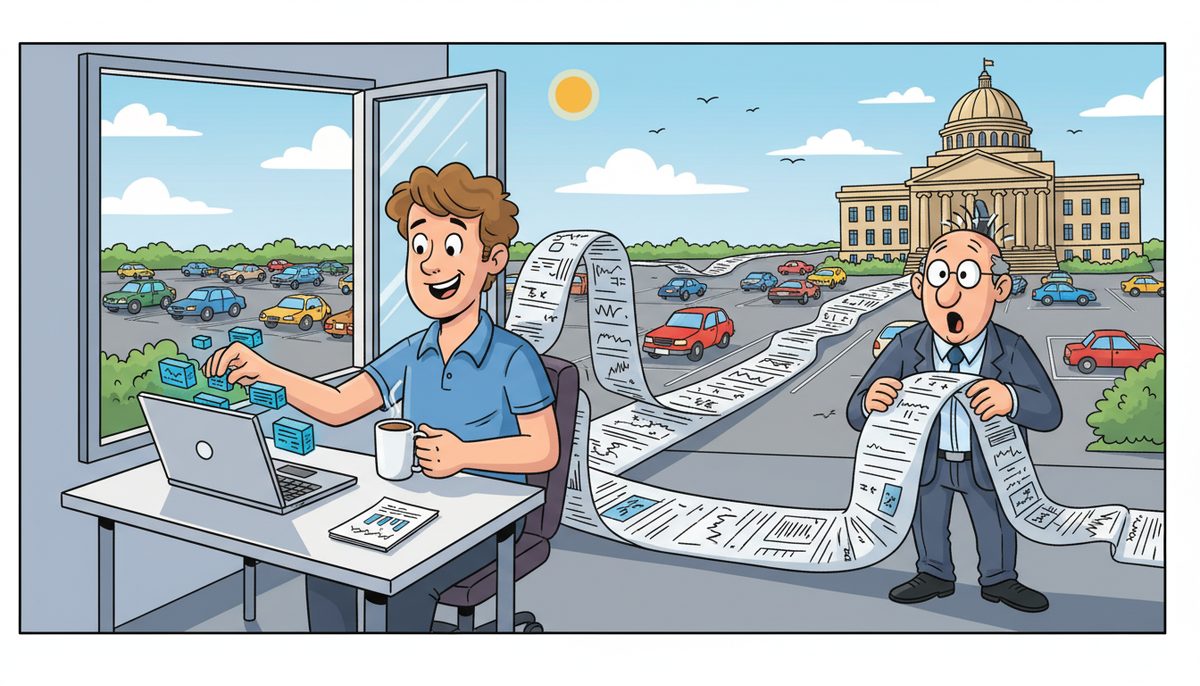
When you copy client financial data into ChatGPT, Claude, or other AI tools to draft correspondence or analyze numbers, you transmit confidential information to third-party servers where it may be stored, analyzed, and used for model training—creating immediate violations of PIPA, CPA BC confidentiality standards, and your professional duty to protect client privilege. A single copy-paste during busy season can trigger mandatory breach reporting under BC’s Personal Information Protection Act, with potential fines reaching $100,000 for organizations under Section 61.
Why does copying client data into AI tools violate your professional obligations?
Your engagement letter promises clients that their financial information stays confidential. When you paste a client’s trial balance, T1 data, or working papers into an AI chatbot, you disclose that information to the AI company’s servers—often located outside Canada—without client consent.
CPA BC’s Rules of Professional Conduct require you to maintain confidentiality of client information except where specifically authorized or legally required to disclose. AI tools are neither. The moment you paste client-identifiable data into a prompt window, you breach that duty.
BC’s Personal Information Protection Act requires you to obtain consent before disclosing personal information to third parties and to ensure those third parties provide comparable protection. Most AI providers’ terms of service explicitly state they may use inputs for training and improvement—meaning your client’s financial data could appear in responses to other users.
During a CPA BC practice inspection, reviewers examine your data handling procedures. If they discover staff routinely copy-pasting client information into AI tools, you face findings related to inadequate safeguards and potential confidentiality breaches.
The convenience of asking an AI to “draft a letter explaining this tax position” evaporates when you realize you’ve just transmitted privileged client-accountant communications to servers you don’t control.
What specific client information triggers compliance violations when pasted into AI?
Any information that identifies a client or their financial position creates risk. This includes obvious identifiers like names, business numbers, and SIN numbers, but also extends to financial data that could identify the client when combined with other information.
Trial balances with company-specific account names and balances are identifiable. So are adjusting journal entries that reference specific transactions. Tax return data—T1, T2, T4 slips—all contain personal information protected under PIPA.
Working papers present particular risk because they often contain your analysis, client explanations, and supporting documentation that together create a detailed picture of the client’s financial situation and business operations. Pasting even a portion of an engagement file into an AI tool discloses confidential information.
Correspondence drafts are equally problematic. When you paste a client email asking about their SR&ED claim or capital gains treatment and ask AI to draft a response, you disclose both the client’s question and their underlying tax situation.
Even seemingly innocuous data creates risk. A list of account balances without a company name can still identify a client if the pattern is distinctive—particularly in Victoria’s smaller business community where industry participants may recognize competitors’ financial profiles.
How do AI companies actually use the data you paste into their tools?
Most commercial AI services operate under terms that give them broad rights to your inputs. OpenAI’s terms for the free version of ChatGPT historically allowed use of conversations for model training, meaning your client’s data could become part of the training dataset that improves future versions.
Paid enterprise versions often include opt-outs from training, but data still passes through and is temporarily stored on the provider’s servers. Those servers may be located in the United States or other jurisdictions with different privacy standards than Canada.
Even when providers promise not to train on your data, they typically retain it for some period for abuse monitoring, service improvement, and legal compliance. You’ve lost control of where that information goes and who can access it.
Some AI tools explicitly state they may share data with affiliates, service providers, and in response to legal requests. Your client’s financial information could be disclosed to parties you’ve never heard of, in jurisdictions where Canadian privacy law doesn’t apply.
The terms of service you clicked through without reading likely include provisions that your use constitutes your representation that you have rights to share the information you’re pasting. When that information is confidential client data, you don’t have those rights—but you’ve already transmitted it.
Cloud-based AI services also create data residency issues. PIPA requires you to know where personal information is stored and to ensure it receives comparable protection. When you paste data into an AI prompt, can you confidently tell CPA BC inspectors which country’s servers processed and stored that information?
What happens during a CPA BC practice inspection when AI use is discovered?
Practice inspections examine your quality control procedures, including how you protect client confidentiality. Inspectors review your IT controls, staff training, and actual practices for handling sensitive information.
If browser history, IT logs, or staff interviews reveal routine use of AI tools with client data, you face findings related to inadequate safeguards. The inspector will document that you lack policies preventing unauthorized disclosure and that staff don’t understand confidentiality requirements.
Those findings go in your inspection report. Depending on severity, you may be required to implement corrective action, undergo follow-up inspection, or face referral to CPA BC’s Professional Conduct department for investigation.
A conduct investigation can result in disciplinary action ranging from a reprimand and mandatory training to suspension or cancellation of your practicing certificate. Even if discipline is avoided, the investigation itself consumes time during your busiest months and creates stress and reputational risk.
You’ll also need to assess whether a reportable breach occurred. If client data was disclosed to an AI provider without consent, PIPA may require you to notify affected clients and the Privacy Commissioner. That conversation—explaining that you pasted their tax information into ChatGPT—damages client relationships and your professional reputation.
The cost extends beyond regulatory consequences. Clients who learn their confidential information was shared with AI companies may terminate the engagement, file complaints, or pursue civil claims for breach of contract or negligence.
How can you use AI tools safely without creating compliance exposure?
The solution isn’t avoiding AI entirely—it’s controlling what information you share. Use AI for general research, technical questions, and drafting templates that contain no client-specific information.
Ask AI to explain a complex tax provision, draft a generic engagement letter template, or outline the structure for a financial statement note. These uses don’t disclose confidential information because they contain no client data.
When you need AI assistance with client-specific work, anonymize completely before pasting. Remove all identifiers: names, business numbers, account names that reveal industry or operations, and any figures distinctive enough to identify the client.
Better yet, work with hypothetical examples. Instead of pasting your client’s actual trial balance, create a simplified example with round numbers that illustrates the accounting issue you’re researching. The AI can still help you think through the problem without ever seeing real client data.
For firms that want to leverage AI more extensively, enterprise versions with data protection agreements exist—but require careful vetting. You need contracts that prohibit training on your data, specify Canadian data residency, include confidentiality obligations, and provide audit rights. Even then, you’re adding a third party to your data protection chain.
Document your AI use policy in writing. Specify what tools are approved (if any), what information can never be pasted (client-identifiable data), and what training staff receive. During practice inspections, documented policies demonstrate you’ve thought through the risks and implemented controls.
Train staff explicitly on AI risks. Many team members don’t realize that pasting client data into ChatGPT is equivalent to emailing it to a stranger. They see it as a productivity tool, not a disclosure. Make the compliance implications clear and provide examples of safe versus unsafe uses.
A single copy-paste of client data into an AI tool can trigger PIPA breach reporting, CPA BC findings, and professional liability claims—risks that far outweigh the seconds saved in drafting.
What technology controls actually prevent accidental AI disclosures?
Policy alone won’t protect you when staff are rushing to meet April 30th deadlines. You need technical controls that prevent accidental disclosures even when someone isn’t thinking clearly at 11 PM during busy season.
Web filtering can block access to consumer AI tools from your office network. If ChatGPT, Claude, and similar services are inaccessible from work computers, staff can’t paste client data into them—even accidentally.
Data loss prevention (DLP) tools monitor outbound data and can flag or block transmission of sensitive information patterns. When configured properly, DLP can detect SIN numbers, business numbers, or even patterns that look like financial data and prevent them from being pasted into web forms.
Endpoint monitoring shows you what applications staff are using and what websites they visit. Regular review of these logs lets you identify AI tool usage before it becomes a pattern—and address it through training rather than discovering it during a practice inspection.
Network segmentation keeps client data on servers and workstations that have restricted internet access. If the computer that stores engagement files can’t reach external AI services, the risk of accidental disclosure drops substantially.
These controls require IT expertise that understands both the technology and your compliance obligations. Vancouver Island CPA firms face a particular challenge: you need someone who can implement enterprise-grade security but respond immediately when systems need adjustment during tax season, without waiting for a ferry-dependent technician.
When you need IT support that understands CPA compliance deadlines
You know the panic when you discover staff have been using AI tools with client data and you’re facing potential PIPA breach reporting during busy season. Every hour spent investigating the scope of disclosure is an hour not spent completing returns due in days.
Victoria CPA firms need technology partners who grasp both the IT security requirements and the professional compliance obligations—someone who knows that “client confidentiality” isn’t just a buzzword but a regulatory requirement with inspection consequences.
Marla, who runs a financial services business, experienced the value of proper data protection: “With DataStream, our entire team is now working together more efficiently than ever, all while ensuring our data is protected and secure.” That protection requires controlling where client data goes—and AI tools fall outside your security perimeter.
When you need web filtering, DLP tools, or network controls to prevent AI-related data disclosures, you need them implemented with your practice workflow in mind. Not just blocking everything and creating workarounds that defeat the security—but controls that protect client data while letting you work efficiently.
Wally, a retail client, saw how the right approach works: “DataStream worked with us to address priority issues as budget would allow and implemented a project plan to update our network, software systems, and work with our existing operations.” For CPA firms, that project plan needs to include controls that protect client confidentiality in an AI-enabled world.
Here’s how to protect your practice from AI compliance risks:
- Call (250) 929-0745 and talk immediately to a Victoria technician who understands CPA confidentiality requirements and can assess your current AI exposure without waiting for ferry-dependent mainland support.
- Get a compliance-focused security assessment that identifies where client data could be disclosed through AI tools, web applications, or other cloud services—with most technical issues resolved remotely within minutes.
- Implement controls and staff training that prevent accidental disclosures while maintaining the workflow speed you need during busy season, with automatic on-site dispatch if complex network changes are required.
What does AI-safe practice management actually look like?
You complete tax season knowing that technical controls prevent staff from accidentally pasting client data into AI tools—even during the exhausted final days before April 30th when judgment falters.
When CPA BC conducts your practice inspection, you confidently show documented policies, staff training records, and technical logs demonstrating that client data stays within your controlled systems. The inspector finds no confidentiality concerns.
Your team still benefits from AI for research and drafting—but only with anonymized or hypothetical data that creates no disclosure risk. You get the productivity gains without the compliance exposure.
Clients trust you with their most sensitive financial information because you can explain exactly how you protect it, including from emerging risks like AI tools that other firms haven’t even considered.
You sleep soundly knowing that a staff member’s moment of convenience—pasting data into ChatGPT to save five minutes—won’t trigger breach reporting, client notifications, and professional conduct investigations that consume weeks during your busiest season.
Call (250) 929-0745 to talk to a Victoria technician who understands both IT security and CPA compliance requirements—and can implement controls that protect client confidentiality without waiting for ferry schedules during tax season. Or explore our managed IT services designed for professional practices that need compliance-focused technology support.
Frequently asked questions
Can I use AI tools if I remove client names before pasting data?
Removing names alone is insufficient because financial data patterns, account structures, and transaction details can still identify clients—particularly in Victoria’s smaller business community. PIPA requires that de-identified information cannot reasonably be re-identified. Unless you’ve removed all identifying details including distinctive financial patterns, you’re still disclosing personal information. For CPA compliance, the safer approach is using only hypothetical examples with no connection to actual client data.
Do enterprise AI versions with privacy agreements solve the compliance problem?
Enterprise agreements reduce but don’t eliminate risk. You’re still disclosing client information to a third party, which requires client consent under PIPA and creates a longer chain of custody for confidential data. The AI provider must offer comparable protection, store data in acceptable jurisdictions, and submit to your audit rights. Even with strong contracts, you’ve added complexity to your confidentiality obligations and created additional points of potential failure during CPA BC inspections.
What should I do if I discover staff have already pasted client data into AI tools?
Immediately document the scope: which clients, what information, which AI services, and over what timeframe. Assess whether the disclosure meets PIPA’s breach reporting threshold (real risk of significant harm). Consult with legal counsel about notification obligations to clients and the Privacy Commissioner. Implement immediate technical controls to prevent further disclosures. During practice inspections, demonstrating swift corrective action mitigates but doesn’t eliminate findings related to the original breach.
Are there AI tools specifically designed for accounting firms that are compliant?
Some practice management and tax software vendors are integrating AI features with data protection agreements and Canadian data residency. These tools operate within your existing software ecosystem where client data already resides under contract. However, you must still review terms carefully, ensure PIPA compliance, obtain appropriate client consent if required, and document your assessment. Purpose-built accounting AI differs substantially from general chatbots regarding compliance risk.
How do I train staff on AI risks without making them afraid to use helpful technology?
Focus training on the bright line: never paste client-identifiable information into any external tool without explicit authorization. Provide examples of safe uses (researching technical tax questions with hypothetical facts) versus unsafe uses (pasting actual trial balances). Explain the professional consequences—not to create fear, but to build understanding that confidentiality is a core professional obligation. Offer approved alternatives for common tasks where staff currently use AI.