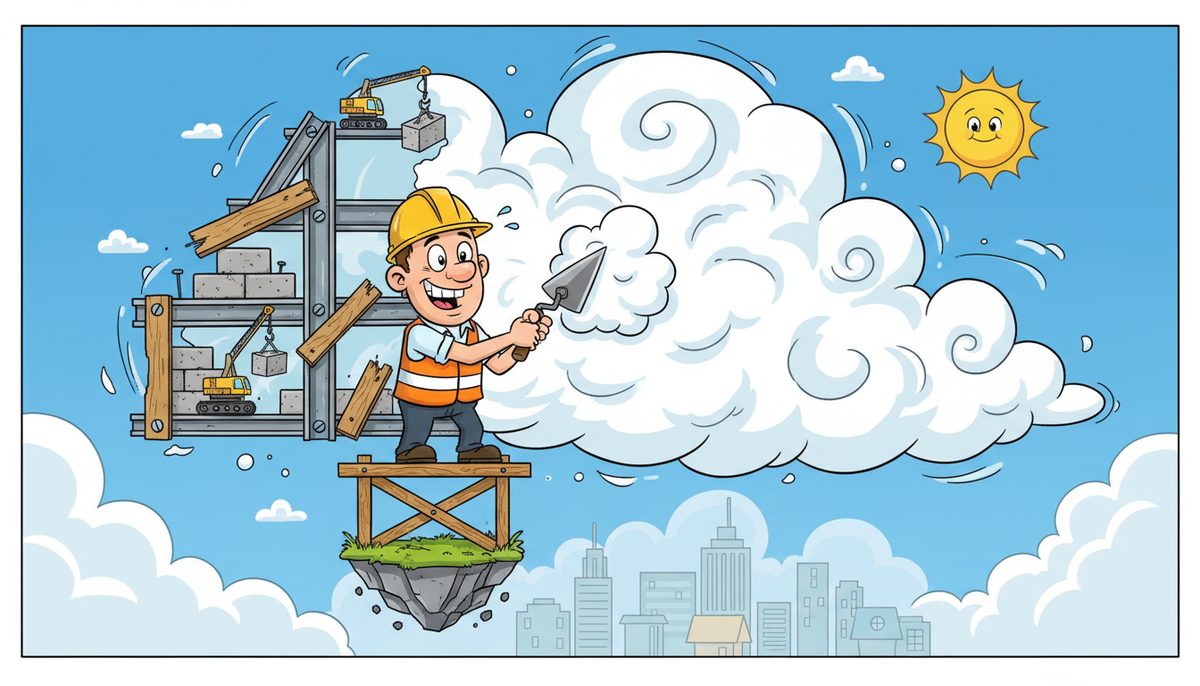
Yes, hybrid cloud environments keep your estimating software, project files, and BIM data accessible from both your office and job sites across Vancouver Island. Sensitive bid documents and financial data stay on local servers for speed and control, while field staff access drawings, RFIs, and daily reports through secure cloud connections—even when cellular service is spotty at rural sites. Construction companies typically see 3-5 hours per week recovered when infrastructure matches their workflow between office and field.
Why does your construction software keep failing when field staff need it most?
Your superintendent calls from a site in Sooke saying he can’t pull up the shop drawings the electrical sub needs today. Your estimator in the office can access everything instantly, but your field workers see spinning wheels or error messages.
The villain here is the assumption that one infrastructure model fits every construction workflow. Mainland IT providers often push “cloud-only” solutions that sound modern but ignore the reality of Vancouver Island job sites: cellular dead zones in Malahat, Shawnigan Lake, and Port Renfrew where cloud-dependent apps become useless. Or they recommend keeping everything on-premise, which means field staff can’t access anything unless they’re physically in your office.
You’re stuck between two bad options. Go all-cloud and watch productivity collapse when connectivity fails at the job site. Stay all on-premise and force project managers to drive back to the office every time they need a submittal or as-built drawing.
Construction workflows demand both: fast local access to large files like BIM models and estimating databases, plus reliable remote access for field staff coordinating with subs and clients. Hybrid cloud architecture puts the right data in the right place.
What happens to your bids and projects when your IT infrastructure can’t adapt?
You miss tender deadlines because your estimator can’t access the pricing database from home the night before a bid closes. Your team built the entire estimate, but the file is locked on the office server and nobody can get in to generate the final PDF.
Field coordination breaks down. Your site superintendent needs to review a change order with the general contractor, but he can’t access your project management system from the job trailer. The GC makes decisions without your input, and you find out about scope changes after the work is already done.
You lose bids to competitors who can respond faster. When an RFI comes in at 4 PM asking for clarification by morning, your team scrambles to access files from multiple locations. Competitors with proper hybrid infrastructure pull the data instantly and submit their response while you’re still troubleshooting access.
WorkSafeBC incident reporting becomes a liability. When an injury occurs at a remote job site, you need immediate access to your safety program documentation and incident reporting system. If that data only lives on your office server and the site supervisor can’t reach it, you risk missing mandatory reporting deadlines.
The Builders Lien Act requires meticulous documentation with specific timelines. When a payment dispute arises and you need to prove completion dates or change order approvals, you can’t afford to wait until someone drives to the office to retrieve files. Delayed documentation means delayed payment—or worse, lien claims you can’t defend.
How does hybrid cloud actually work for construction companies?
Hybrid cloud means your critical data lives in two places simultaneously, with each location serving a specific purpose. Your estimating software and financial systems run on local servers in your office because they need fast access to large databases and you want direct control over sensitive bid information.
At the same time, project files—drawings, submittals, RFIs, daily reports, and as-builts—sync automatically to secure cloud storage. Field staff access these files through encrypted connections that work on cellular data, job site WiFi, or even satellite connections in remote areas.
When your project manager opens a drawing on his tablet at a Duncan job site, he’s pulling it from cloud storage. When your estimator runs a takeoff in the office, she’s working directly from the local server at full speed. Both see the same current version because the systems sync continuously.
The architecture includes failover protection. If your office server fails during a critical deadline, your team can still access project files from the cloud backup. If internet connectivity drops at the office, staff continue working from local copies that sync automatically once connection returns.
For construction companies, this typically means keeping your estimating software, accounting system, and bid libraries on a local server with robust backup, while project collaboration tools, document management, and field reporting run in the cloud. The two environments connect through secure VPN tunnels that encrypt data in transit.
Hybrid cloud adapts to your workflow instead of forcing you to adapt to technology limitations.
What specific problems does hybrid cloud solve for Vancouver Island construction?
Geography creates unique challenges here. Your office might be in Victoria, but you’re managing projects in Nanaimo, Courtenay, and Port Alberni. Mainland suppliers need access to your specs and shop drawings. Architects in Vancouver need to review your submittals. The general contractor’s team wants real-time access to progress photos and daily reports.
Hybrid approach lets you control access granularly. Your financial data and bid documents never leave your office server—too sensitive for cloud exposure. But you create secure cloud folders for each project where authorized parties can access exactly what they need: the architect sees submittals, the GC sees progress reports, subs see their scope-specific drawings.
Cellular connectivity on the island is inconsistent. A job site in Cobble Hill might have decent service, but move up-island to a rural residential development and you’re working with one bar of LTE. Cloud-based systems that require constant connectivity fail. Hybrid solutions cache files locally on field devices, syncing changes when connectivity allows.
BC’s FIPPA requirements affect public sector construction projects. When you’re working on a government building, hospital, or university project, privacy regulations dictate where data can be stored and who can access it. Hybrid infrastructure lets you keep FIPPA-sensitive data on local servers within Canadian borders while still enabling collaboration through compliant cloud tools.
Backup and recovery become more resilient. Your local server backs up to both local storage and offsite cloud backup. If ransomware hits your office, you restore from clean cloud copies. If a cloud provider has an outage, your office continues working from local systems. You’re protected from both local disasters and cloud service disruptions.
Don Siebert, a retail client, described the peace of mind this approach provides: “With DataStream, I know our best interests are being looked after as they ensure we have the best solutions for our needs. Their proactive approach to technology means problems seldom crop up however they get things sorted out quickly and efficiently when they do.” For construction companies, that proactive approach means your hybrid infrastructure is monitored continuously so problems get fixed before they impact bids or project deadlines.
How do you know if your current setup is actually hybrid or just poorly connected systems?
Many construction companies think they have hybrid cloud because they use Dropbox for some files and keep a server in the office. That’s not hybrid architecture—that’s disconnected systems creating version control chaos.
Real hybrid cloud means unified management. You see all your data—local and cloud—through a single interface. Permissions are consistent across both environments. Backups cover everything automatically. When a file changes in one location, it updates everywhere without manual intervention.
Ask yourself: Can your field staff access the current version of project files from any job site without calling the office? Does your estimating software run at full speed without depending on internet connectivity? If your office burns down tonight, could your team access everything they need to submit tomorrow’s bid from home?
If the answer to any of those questions is no, you don’t have hybrid cloud—you have a patchwork that’s one failure away from costing you a contract.
True hybrid infrastructure includes automated failover, so if one component fails, traffic routes automatically to the backup. It includes encryption both at rest and in transit, protecting your bid data from competitors and your client data from breaches. It includes monitoring that alerts you to problems before they cause downtime.
Most importantly, it includes support from people who understand construction deadlines. When your estimating software won’t connect to the cloud backup at 4 PM before a noon tender deadline, you need someone who answers the phone immediately and fixes it remotely within minutes—not a ticket system that promises a callback in 24 hours.
Construction companies on Vancouver Island lose an average of 3-5 hours per week to file access problems when infrastructure doesn’t match their workflow between office and job sites.
Why does working with a local Vancouver Island provider matter for hybrid cloud?
Mainland IT companies design beautiful hybrid cloud architectures on paper, then discover that their remote support can’t diagnose why field staff in Port Renfrew can’t access files. They promise 24-hour response times, which means nothing when you’re 12 hours from a tender deadline.
You know the frustration of calling IT support and getting voicemail or someone overseas who doesn’t understand that “the ferry schedule” is a real constraint on getting help. You understand the panic when your project files are inaccessible and you’re watching the clock tick toward a submittal deadline, wondering if help will arrive in time.
Since 2012, DataStream Networks has been 100% committed to providing the most reliable and professional IT service on Vancouver Island. Phones are answered with live local people—no voicemail, no phone trees, no long hold times. Technicians are based in Victoria, Nanaimo, Duncan, and Cobble Hill, which means they understand island geography, connectivity challenges, and construction workflows firsthand.
Most problems get fixed remotely within minutes because technicians know the common issues that affect island-based hybrid cloud setups: VPN tunnels that drop when cellular switches towers, sync conflicts when multiple field staff edit the same file offline, permission problems when subs need temporary access to specific project folders.
When remote support isn’t enough—when your office server needs physical attention or a job site needs on-site network troubleshooting—a technician is automatically dispatched to your location on Vancouver Island. No waiting for the ferry. No explaining island geography to someone in Toronto.
Mike Carmel, who runs a technology services business, explains why he refers larger projects: “As the owner of a unique mobile computer services business, I specialize in providing technical support and services for a wide range of clients. However, when it comes to enterprise-level IT needs, DataStream Networks is my trusted referral partner… I confidently refer larger clients to DataStream when I’m busy or when projects are larger and require more resources. Their professionalism, reliability…” That reliability matters when your hybrid infrastructure supports time-sensitive construction workflows.
What does getting hybrid cloud right actually look like?
- Call and talk to a real local technician immediately who understands construction deadlines and island geography—no voicemail or phone trees. Your current infrastructure gets assessed, what should stay local versus move to cloud gets identified, and a hybrid architecture that matches your actual workflow between office and job sites gets mapped out.
- Your hybrid environment gets designed, implemented, and tested with your team. Data migrates in phases so you never lose access during the transition. Your estimating software stays fast on local servers. Your project files sync automatically to secure cloud storage. Field staff get trained on accessing what they need from any location. Failover scenarios get tested so you know the backup systems actually work before you need them in an emergency.
- Work with confidence knowing your infrastructure is monitored continuously. Problems get diagnosed and fixed remotely within minutes in most cases. If on-site support is needed anywhere on Vancouver Island, a technician is automatically dispatched. Your team focuses on winning bids and completing projects while your hybrid cloud just works.
Success looks like submitting every tender on time because your estimator can access pricing databases from anywhere. It looks like field staff pulling up current drawings at job sites without calling the office. It looks like recovering from a ransomware attack in hours instead of days because your cloud backups were clean and current. It looks like coordinating seamlessly with mainland suppliers and clients despite island geography.
If you’re tired of losing productivity to file access problems, or worried that your current infrastructure can’t protect you from the next deadline-threatening failure, call (250) 929-0745 to talk to a real technician now. Your current setup gets assessed and you see exactly what hybrid cloud can do for your construction business.
Frequently asked questions
How much does hybrid cloud infrastructure cost for a construction company?
Hybrid cloud costs depend on your specific needs—how many users, how much data, and what applications you’re running. Managed IT services that include hybrid infrastructure design, implementation, and ongoing support typically range from $150–$225 per user per month. Cloud backup for servers runs $40–$150 per device per month, while local server backup adds $25–$75 per device per month. Your workflow gets assessed and accurate pricing based on your actual requirements gets provided.
Can field staff access files when cellular service is poor at remote job sites?
Yes, properly designed hybrid cloud includes offline access capabilities. Field devices cache frequently used files locally, so your superintendent can open drawings, daily reports, and submittals even without connectivity. Changes sync automatically once cellular or WiFi connection returns. This approach works reliably at rural Vancouver Island job sites where connectivity is inconsistent, ensuring field staff stay productive regardless of signal strength.
How long does it take to migrate our construction data to hybrid cloud?
Migration timelines depend on how much data you have and how complex your current systems are. Most construction companies complete the transition in 2-4 weeks with minimal disruption to daily operations. Migration happens in phases, starting with less critical data to test the systems, then moving estimating databases and active project files during planned downtime. Your team continues working throughout the process with careful coordination around bid deadlines.
What happens if our office server fails during a critical tender deadline?
Hybrid cloud architecture includes automatic failover. If your office server goes down, your team can immediately access project files and estimating data from cloud backups. Your entire environment can be restored to temporary cloud servers within hours, letting you complete your bid while failed hardware gets repaired or replaced. Local Vancouver Island technicians respond immediately when failures occur, with most problems diagnosed and resolved remotely within minutes.
Does hybrid cloud meet FIPPA requirements for public sector construction projects?
Yes, when designed correctly. FIPPA-sensitive data stays on local servers within Canadian borders with strict access controls. Project collaboration tools use FIPPA-compliant cloud services with data residency guarantees. Construction companies working on government, hospital, and university projects get hybrid infrastructure that meets all privacy and security requirements while still enabling efficient collaboration with project teams and stakeholders across multiple locations.