
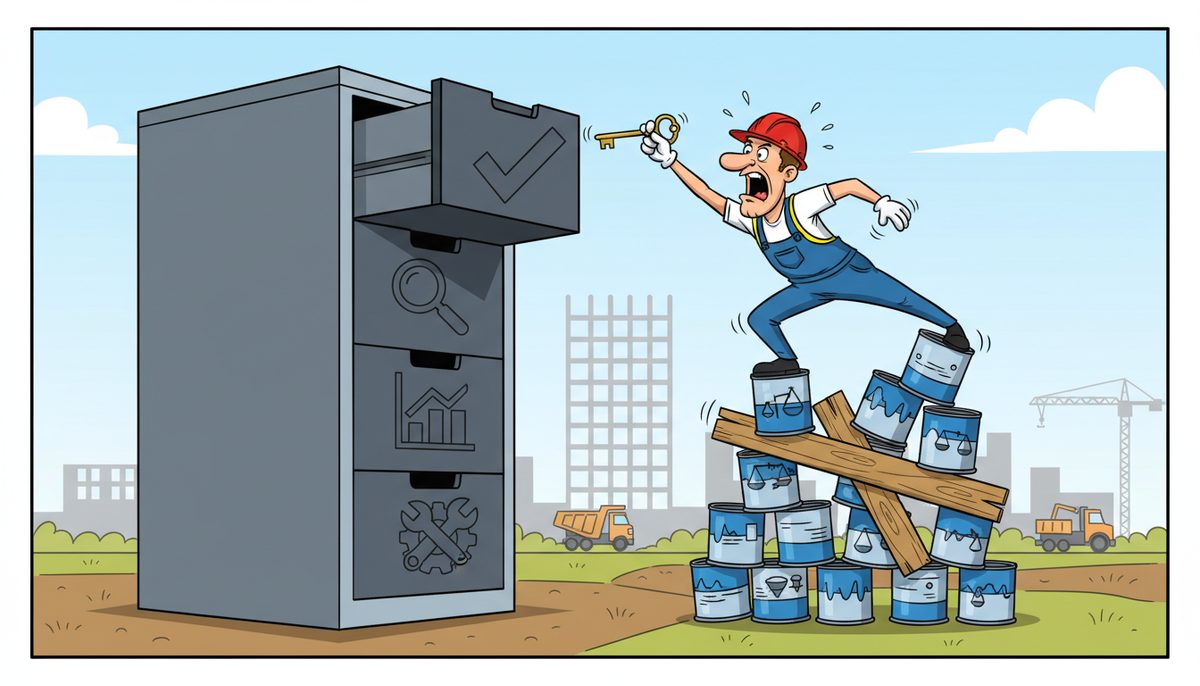
The four A’s of budgeting are Assess, Allocate, Adjust, and Analyze. This framework helps businesses systematically manage their finances by first evaluating their current financial position, then distributing resources to priorities, making real-time corrections as circumstances change, and reviewing outcomes to improve future planning. Construction firms on Vancouver Island use this 4-step cycle to manage project budgets, IT investments, and operational expenses across multiple job sites.
How does the Assess phase establish your budgeting foundation?
Assessment means taking stock of your complete financial picture before committing a single dollar. For construction companies in Victoria, this includes reviewing past project costs, current contracts, accounts receivable aging, equipment depreciation, and upcoming obligations like WorkSafeBC premiums and subcontractor payments.
You need accurate data to assess effectively. Construction firms working on heritage building renovations or seismic upgrades must track detailed costs for documentation requirements under BC Building Code. When your estimating software or project management system goes down, you lose visibility into your financial position at the worst possible time—typically right before a bid deadline.
The assessment phase also identifies your technology costs. Many Victoria construction companies discover they’re spending more on reactive IT fixes than they would on managed IT services that prevent problems. A proper assessment reveals hidden costs: downtime during progress billing cycles, lost bids due to system failures, and staff time spent troubleshooting instead of managing projects.
Kalvin, a construction professional, noted: “Great knowledgeable technicians. Always available to help & get me out of a pinch.” This reflects how reliable IT support becomes visible during assessment—you calculate not just the service cost, but the value of eliminating those pinch moments that derail your budget planning.
Assessment establishes your baseline for every subsequent budgeting decision.
What does Allocate mean for construction project budgets?
Allocation is the distribution of your assessed resources to specific priorities. Construction firms must allocate across multiple dimensions: direct project costs, overhead, equipment maintenance, insurance, and technology infrastructure that keeps job sites connected to the main office.
Smart allocation recognizes that some investments prevent larger expenses. Allocating funds for managed IT services might seem significant until you calculate the cost of losing access to your estimating system during a tender deadline or experiencing data loss that violates BC’s Builders Lien Act documentation requirements.
For construction companies operating across Vancouver Island—from Victoria to Nanaimo to Duncan—allocation must account for geographic challenges. Job sites in rural areas have limited cellular connectivity, requiring investment in reliable remote access solutions and local backup systems. When you’re coordinating between island job sites and mainland suppliers, your technology allocation directly impacts project coordination efficiency.
Allocation also means deciding between capital expenses and operational expenses. Do you hire an in-house IT technician (plus benefits, training, and coverage during vacations) or allocate those funds to a managed service that provides a full team with no gaps? For most Victoria construction firms with 10–50 employees, the operational expense model provides better coverage at lower total cost.
The allocation phase forces you to prioritize based on business impact, not just immediate price tags.
Why is the Adjust phase critical for construction firms?
Budgets never survive contact with reality unchanged. The Adjust phase acknowledges that change orders, material price fluctuations, weather delays, and unexpected site conditions require real-time budget modifications. Construction companies that can’t adjust quickly end up with outdated budgets that provide no useful guidance.
Technology budgets need the same flexibility. When you win a large institutional project subject to FIPPA privacy requirements, you may need to adjust your cybersecurity allocation upward immediately. If a subcontractor’s compromised email leads to a phishing attempt against your accounts payable team, you adjust by adding email protection before you experience a fraudulent wire transfer.
The adjustment phase relies on having current data. Construction firms using managed IT services for construction get regular reports on system health, security incidents, and usage patterns that inform budget adjustments. You can’t adjust what you can’t measure.
Victoria’s construction market presents unique adjustment triggers. Heritage building renovations often uncover unexpected conditions requiring additional documentation technology. Seismic upgrade projects may extend timelines, requiring adjustments to your IT support allocation to cover the longer project duration.
Adjustment isn’t failure—it’s responsive management that keeps your budget aligned with current reality.
How does the Analyze phase improve future budgeting accuracy?
Analysis closes the loop by reviewing what actually happened versus what you planned. Construction firms analyze completed projects to improve estimating accuracy for future bids. The same discipline applies to IT budgets: Did your technology investments deliver the promised value? Where did you overspend or underspend, and why?
For Vancouver Island construction companies, analysis might reveal that temporary site office IT setup costs were higher than budgeted because you didn’t account for the time your project manager spent troubleshooting connectivity issues. This insight adjusts your next budget to include proper setup support from the start.
Analysis also identifies patterns. If you’re calling for IT support most frequently during month-end when you’re processing progress billing and retention calculations, that pattern suggests you need more robust systems or additional training during those critical windows.
Kevin Gamble from an accounting firm on Vancouver Island shared: “We didn’t experience a single downtime during an entire server upgrade.” This zero-downtime result during a major infrastructure change demonstrates the value that analysis should capture—not just the project cost, but the business continuity benefit that prevented lost billing time and staff frustration.
Construction companies that complete all four A’s—Assess, Allocate, Adjust, and Analyze—improve their budget accuracy by 15–30% year over year as they refine their understanding of true costs and value drivers.
The analyze phase transforms budgeting from guesswork into a data-driven process that gets more accurate with each cycle.
How do construction firms apply the four A’s to IT budgeting?
IT represents a significant and often underestimated budget category for construction companies. Applying the four A’s framework brings discipline to technology spending that many firms manage reactively rather than strategically.
Start by assessing your current IT costs comprehensively. Include obvious expenses like software licenses and internet service, but also hidden costs: staff time spent on IT issues, lost productivity during system outages, rushed courier fees when you can’t email large plan sets, and the opportunity cost of bids you couldn’t submit due to technical problems.
Allocate based on business priorities, not just IT preferences. If your competitive advantage depends on fast, accurate estimating, allocate sufficient budget to ensure your estimating system has proper backup and rapid support when issues arise. If you’re managing multiple job sites across Vancouver Island, allocate for reliable remote access solutions that work even with limited connectivity.
Adjust your IT budget when business conditions change. Landing a large government contract with enhanced security requirements means adjusting your cybersecurity allocation upward. Adding field staff requires adjusting your mobile device management and support allocation. Opening a new office in Nanaimo or Duncan means adjusting for additional local support needs.
Analyze your IT spending quarterly. Are you getting value from that software subscription no one uses anymore? Did the managed service provider reduce your support tickets and downtime as promised? Is your backup solution actually tested and verified, or are you paying for false confidence?
The four A’s transform IT from a mysterious black box expense into a manageable budget category with clear inputs, outputs, and continuous improvement.
What tools help construction companies execute the four A’s effectively?
The four A’s framework requires accurate, timely data. Construction firms need integrated systems that connect estimating, project management, accounting, and time tracking so assessment reflects reality rather than outdated snapshots.
Cloud-based construction management software provides real-time visibility into project costs, making the assessment and adjustment phases faster and more accurate. When your project manager updates a daily report from the job site, that information immediately flows to your financial assessment without manual data entry or reconciliation delays.
Reliable backup and recovery systems protect the data that makes the four A’s possible. Cloud backup ensures that your historical project data, vendor pricing, and budget analyses survive hardware failures, ransomware attacks, or accidental deletions. Without this data continuity, you’re starting each budget cycle from scratch.
Dashboard and reporting tools turn raw data into actionable insights for the analyze phase. You need to see trends: Are change orders increasing on certain project types? Is overtime spiking during specific project phases? Are IT support calls concentrated around month-end processes?
For Victoria construction firms, having local IT support that understands construction workflows makes execution practical. When you’re assessing technology costs or adjusting your budget based on new project requirements, you need technicians who understand job site challenges, submittal deadlines, and the consequences of system downtime during bid preparation.
- Assess: Review your complete financial position including past costs, current obligations, and hidden technology expenses
- Allocate: Distribute resources based on business priorities and impact, not just sticker prices
- Adjust: Make real-time budget modifications as projects evolve and conditions change
- Analyze: Review outcomes quarterly to improve accuracy and identify patterns for future planning
The right tools don’t just support the four A’s—they make the framework automatic rather than a manual exercise you attempt quarterly and abandon by week two.
Frequently asked questions
What’s the difference between the four A’s and traditional budgeting?
Traditional budgeting often focuses only on allocation—deciding how to spend money—without systematically assessing the starting position, adjusting for changing conditions, or analyzing results. The four A’s create a complete cycle that treats budgeting as an ongoing management process rather than an annual planning event. This continuous approach helps construction firms respond to project changes, market conditions, and unexpected challenges while maintaining financial discipline throughout the year.
How often should construction companies cycle through the four A’s?
Assessment and allocation typically happen annually for overall company budgets and per-project for individual jobs. Adjustment should occur monthly or whenever significant changes occur—major change orders, new contracts, or unexpected expenses. Analysis works best quarterly for operational budgets and at project completion for job-specific budgets. Victoria construction firms managing multiple concurrent projects often maintain rolling cycles, with different projects at different phases of the four A’s framework simultaneously.
Can small construction companies benefit from the four A’s framework?
Small construction firms benefit even more than large companies because they have less financial cushion to absorb budgeting mistakes. The framework scales to any size—a three-person renovation contractor can assess their position in an afternoon, allocate resources across two or three active projects, adjust when material costs spike, and analyze completed jobs to improve future estimates. The discipline matters more than the dollar amounts involved in the budget itself.
What’s the biggest mistake construction firms make with IT budgeting?
Most construction companies skip the assessment phase for IT costs, treating technology as an overhead expense rather than analyzing true total costs including downtime, lost productivity, and staff frustration. They allocate based on sticker prices without considering business impact, never adjust until a crisis forces change, and rarely analyze whether their IT investments delivered value. This reactive approach typically costs 40–60% more than proactive IT budgeting using the four A’s framework with proper assessment and analysis.
How does the four A’s framework handle unexpected expenses?
The Adjust phase specifically addresses unexpected expenses by providing a structured process for evaluating the new cost, determining its priority relative to existing allocations, and deciding whether to absorb it within current budgets, reduce other allocations, or increase overall spending. Construction firms face unexpected expenses constantly—hidden site conditions, material shortages, equipment failures—so the adjustment mechanism prevents these surprises from derailing the entire budget. The framework makes reallocation a normal management activity rather than a budget failure.
Should IT costs be allocated per project or as company overhead?
Most construction firms treat core IT infrastructure—servers, network equipment, help desk support, and administrative software—as company overhead allocated across all projects. Project-specific technology costs—temporary site office connectivity, project management software licenses for the project duration, or specialized BIM software for particular clients—should be allocated directly to those projects. This hybrid approach ensures that general business technology is properly funded while project-specific costs are recovered through project budgets and don’t burden the company’s overhead rate.