
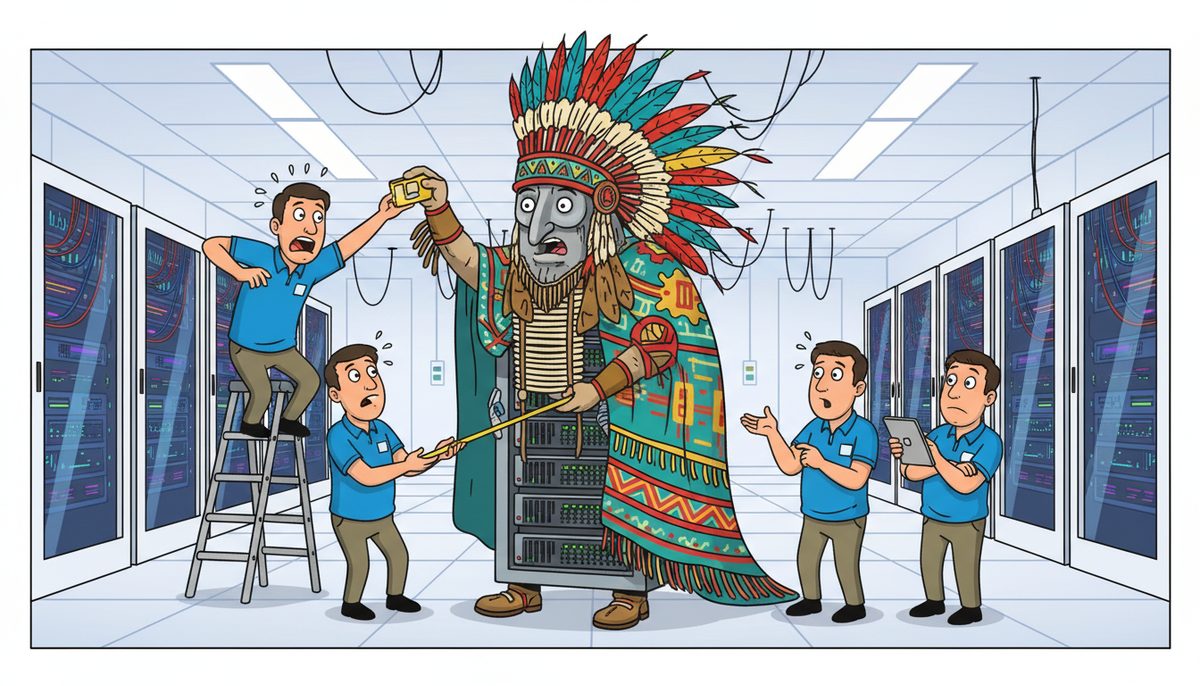
Your First Nations project data should be hosted on servers physically located in Canada, under Canadian legal jurisdiction, to maintain data sovereignty and comply with OCAP® principles (Ownership, Control, Access, and Possession). For engineering firms working with First Nations clients on Vancouver Island, hosting within British Columbia—preferably Victoria or Vancouver data centers—ensures compliance with FIPPA, PIPEDA, and Indigenous data governance frameworks while keeping sensitive project information under Canadian control. British Columbia hosts over 200 First Nations communities.
Why does hosting location matter for First Nations project data?
When you design infrastructure for First Nations communities—water treatment facilities, housing developments, marine structures—you’re handling more than technical drawings. You’re managing cultural heritage information, traditional territory data, environmental assessments tied to sacred sites, and community consultation records.
The villain here is jurisdictional vulnerability. When your project data sits on servers in foreign countries, it falls under foreign surveillance laws and corporate policies that ignore Indigenous sovereignty. The U.S. CLOUD Act, for example, allows American authorities to access data stored by U.S. companies regardless of where the servers physically sit.
This creates an impossible situation: you’ve signed agreements with First Nations clients promising to protect their data according to OCAP® principles, but your hosting arrangement has already surrendered control to foreign legal frameworks. Your client discovers their community consultation records or traditional use study data could be subpoenaed by a foreign government without their knowledge or consent.
That’s not just a contract violation—it’s a betrayal of the trust-based relationships that make First Nations projects possible. Engineers and Geoscientists BC expect you to maintain professional standards of confidentiality, and your First Nations clients expect you to honor their inherent rights to data sovereignty.
What are OCAP® principles and how do they affect your data hosting?
OCAP® is a registered trademark of the First Nations Information Governance Centre, representing the four pillars of Indigenous data sovereignty: Ownership, Control, Access, and Possession. These aren’t optional guidelines—they’re increasingly written into your project agreements, funding requirements, and consultation protocols.
Ownership means First Nations communities own information about their members, territories, and resources. Control means they decide how data is collected, used, and disclosed. Access means they determine who can access their information. Possession means they have physical control over the data.
For your firm, this means the hosting decision isn’t yours alone to make. When you’re storing BIM models of a community center, environmental baseline studies, or archaeological impact assessments, the First Nations client must be able to verify where that data lives and who can access it.
A Vancouver data center under Canadian jurisdiction allows you to demonstrate compliance. You can show your client exactly where their data resides, confirm it’s subject only to Canadian privacy laws, and prove that access requires their consent—not just your company’s policy.
Foreign hosting makes these assurances impossible. You cannot guarantee a First Nations community that their data won’t be accessed under foreign legal authority, and you cannot fulfill the “Control” and “Possession” elements of OCAP® when the physical infrastructure sits outside Canadian sovereignty.
Data sovereignty isn’t a technical specification—it’s a legal and ethical requirement when you work with Indigenous communities.
Which Canadian data center locations best serve your Vancouver Island engineering firm?
Geography matters for both sovereignty and performance. You need fast access to large CAD files, Revit models, and project documentation while meeting the jurisdictional requirements of First Nations clients.
British Columbia data centers in Vancouver or Victoria offer the strongest combination. They’re subject to BC’s Freedom of Information and Protection of Privacy Act (FIPPA) when you handle public sector work, and they provide low-latency access for your Victoria, Nanaimo, or Duncan offices.
When your structural engineer needs to pull a 2GB BIM model for a housing project in a Cowichan community, a Vancouver data center delivers that file in seconds, not minutes. When a subconsultant on the mainland needs access to environmental assessment data, they’re connecting to infrastructure in the same province under the same legal framework.
Some firms consider Toronto or Montreal data centers for redundancy. That’s reasonable for disaster recovery, but your primary hosting should be as close to your operations and your clients as possible. A Victoria engineering firm working primarily with Vancouver Island and coastal First Nations has no operational reason to route daily file access through Ontario.
What you must avoid: any hosting arrangement where the provider cannot guarantee physical server location, or where “Canadian hosting” means a U.S. company with Canadian servers that remain subject to American legal authority. Read the fine print. Ask explicitly: “Are these servers owned and operated by a Canadian company under exclusive Canadian jurisdiction?”
How do you verify a hosting provider meets Indigenous data sovereignty requirements?
Your First Nations clients may ask you to demonstrate hosting compliance before signing project agreements. You need clear answers, not vague assurances about security.
Start with physical location. The provider should specify the exact data center location—not just “Canada” but “Vancouver, BC” or “Victoria, BC.” They should confirm the facility is on Canadian soil and operated under Canadian law.
Next, verify corporate jurisdiction. Is the hosting company Canadian-owned, or a subsidiary of a foreign corporation? U.S.-owned companies operating Canadian data centers may still be subject to U.S. legal authority under the CLOUD Act. A Canadian company with Canadian servers provides the cleanest jurisdictional answer.
Ask about data residency guarantees in writing. The contract should explicitly state that your data will not be transferred outside Canada, that backups remain in Canada, and that support staff accessing your data are subject to Canadian privacy laws.
Review access controls and audit capabilities. Your First Nations client needs to know who can access their data and when. The hosting arrangement should provide detailed access logs and the ability to restrict access to specific individuals or roles.
Luigi, who manages construction projects including work with Indigenous communities in Victoria, found that regaining network control was essential: “DataStream thoroughly cleaned our file sharing, implemented password control, and smoothly transitioned us to take back control of our network.” That level of control extends to hosting—you need to know exactly where data lives and who touches it.
For engineering firms, this often means moving away from consumer-grade cloud services with unclear jurisdictional status toward business-class hosting with explicit Canadian data residency and the ability to demonstrate compliance to clients and regulators.
What happens if your First Nations project data is hosted outside Canada?
The consequences aren’t hypothetical—they’re contractual, legal, and reputational. First Nations communities are increasingly sophisticated about data governance, and they’re writing hosting requirements directly into project agreements.
If you cannot demonstrate Canadian hosting, you may be disqualified from bidding on projects. Federal and provincial infrastructure programs funding First Nations work often require compliance with Indigenous data sovereignty principles, and that includes hosting location.
If your data is already hosted outside Canada and a First Nations client discovers this, you face potential contract breach. They may demand immediate data repatriation, suspend the project, or terminate the agreement. You’ll spend billable hours migrating data under crisis conditions instead of delivering engineering work.
Worse, you damage relationships that took years to build. First Nations communities share information. A reputation for disregarding data sovereignty spreads quickly through the network of band councils, tribal councils, and Indigenous organizations. Future project opportunities disappear.
There’s also professional liability exposure. If sensitive cultural information or traditional knowledge is accessed by unauthorized parties because of inadequate hosting controls, your firm could face claims. Engineers and Geoscientists BC expects members to protect client confidentiality, and “we didn’t think hosting location mattered” isn’t a defense.
The failure scenario is simple: you lose the ability to work with First Nations clients, you lose the growing segment of infrastructure work tied to reconciliation and Indigenous partnerships, and you lose your firm’s reputation in a market where trust is everything.
How does a local IT partner help you meet Indigenous data sovereignty requirements?
You’re an engineering firm, not a data governance specialist. You need someone who understands both the technical requirements and the jurisdictional complexities of hosting First Nations project data.
You know what it feels like when a First Nations client asks where their data is hosted and you realize you don’t have a clear answer because your IT setup was never designed with sovereignty in mind. You’ve felt the frustration when you’re ready to bid on a significant infrastructure project but can’t demonstrate hosting compliance because your current provider uses U.S. servers or won’t provide written data residency guarantees.
A local IT partner who has served Vancouver Island businesses since 2012 understands the specific needs of engineering firms working with First Nations communities across the island and coastal BC. Local technicians—in Victoria, Nanaimo, Duncan, and Cobble Hill—can help you verify your current hosting arrangement, identify jurisdictional gaps, and migrate to Canadian infrastructure when needed.
You get the documentation your First Nations clients require: written confirmation of server location, data residency guarantees, and access control capabilities that support OCAP® principles.
When you need to demonstrate compliance before a project kickoff meeting, you get answers from a real person who understands your deadline—not a ticket system or overseas support center. When a client asks technical questions about data sovereignty during a consultation session, you have the backup you need to answer confidently.
Here’s how to secure your First Nations project data under Canadian jurisdiction:
- Call a local technician who understands engineering workflows and Indigenous data sovereignty requirements—get a clear assessment of your current hosting arrangement and what needs to change.
- Migrate your project data to verified Canadian servers with documented data residency guarantees, access controls, and audit capabilities that support OCAP® compliance.
- Receive written confirmation and documentation you can share with First Nations clients, demonstrating your commitment to data sovereignty and building the trust that wins projects.
What does success look like when you get hosting right?
You submit project proposals with confidence, knowing you can answer any question about data sovereignty and hosting compliance. You include clear statements in your tender documents about Canadian data residency, and that becomes a competitive advantage over mainland firms with unclear hosting arrangements.
Your First Nations clients trust you with sensitive information—traditional use studies, archaeological assessments, community consultation records—because you’ve demonstrated respect for their data governance principles from the first conversation. That trust translates into repeat projects, referrals to other communities, and a reputation as a firm that understands reconciliation isn’t just a word, it’s a practice.
Your engineers focus on design work instead of scrambling to answer hosting questions or migrating data under crisis conditions. Your project files, BIM models, and environmental assessments are backed up, secure, and accessible—all while remaining under Canadian jurisdiction and your clients’ control.
You sleep soundly knowing that a foreign government subpoena or corporate policy change won’t suddenly expose your clients’ sensitive data, and that your professional liability exposure is managed through proper data governance, not just insurance.
That’s what proper hosting delivers: the ability to work with First Nations clients ethically, competitively, and confidently, building the relationships that define successful engineering practice in British Columbia.
Call IT support in Victoria at (250) 929-0745 to talk to a real technician about Canadian hosting solutions that meet Indigenous data sovereignty requirements and support your engineering firm’s work with First Nations communities.
Frequently asked questions
Can First Nations data be stored on U.S. cloud services like AWS or Azure?
U.S. cloud services, even with Canadian data center regions, remain subject to U.S. legal authority under the CLOUD Act, which allows American authorities to access data regardless of physical location. This conflicts with OCAP® principles and Indigenous data sovereignty. First Nations project data should be hosted by Canadian companies on Canadian servers under exclusive Canadian jurisdiction to ensure compliance with sovereignty requirements and client agreements.
Do all First Nations require Canadian data hosting?
Requirements vary by community and project, but Canadian hosting is increasingly standard. Many First Nations write data sovereignty clauses into project agreements, and federal/provincial funding programs for Indigenous infrastructure often require OCAP® compliance. Even when not explicitly required, Canadian hosting demonstrates respect for Indigenous data governance and builds trust. Engineering firms should treat Canadian hosting as the baseline standard for all First Nations work.
What’s the difference between data residency and data sovereignty?
Data residency refers to the physical location where data is stored—which country, province, or data center. Data sovereignty refers to legal jurisdiction and control—which laws govern the data and who has authority over access. For First Nations data, both matter: physical residency in Canada ensures Canadian legal jurisdiction, while sovereignty principles (OCAP®) ensure Indigenous communities maintain ownership and control over information about their territories, members, and resources.
How much does Canadian hosting cost compared to U.S. cloud services?
Canadian business-class hosting is often comparable to or only slightly more expensive than U.S. cloud services when you account for data transfer costs, compliance requirements, and support. For engineering firms, managed IT services including Canadian hosting typically range from $150–$225 per user per month, covering hosting, backup, security, and support. The cost difference is minimal compared to the risk of losing First Nations project opportunities or facing contract breach for non-compliant hosting.
Can backup copies of First Nations data be stored outside Canada?
No. Backup copies are still copies of the data and must remain under the same jurisdictional and sovereignty controls as primary data. If your primary hosting is in Canada but backups replicate to U.S. servers, you’ve undermined data sovereignty. Engineering firms need backup solutions that keep all copies—primary, backup, and disaster recovery—within Canada, ideally with geographic separation between BC data centers for redundancy while maintaining Canadian jurisdiction throughout.