
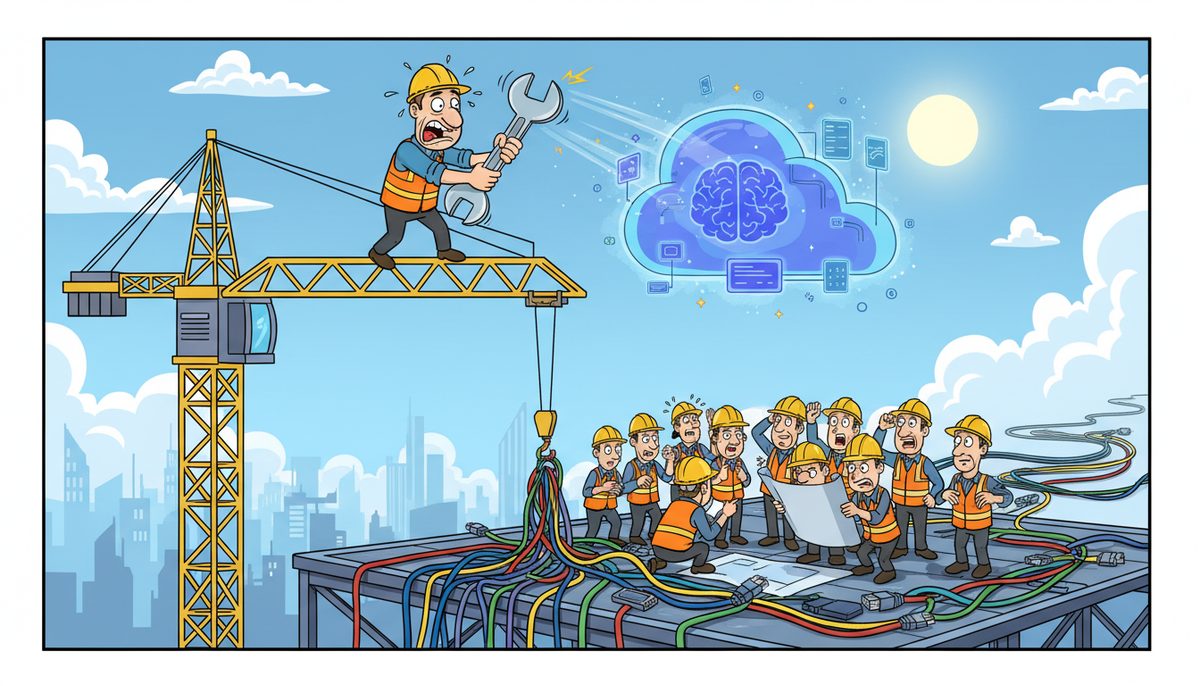
The top IT companies in Canada for construction businesses include national providers like IBM Canada, CGI, and Telus with over 50,000 combined employees, alongside regional specialists who understand industry-specific challenges like bid deadlines, job site connectivity, and WorkSafeBC reporting. For Vancouver Island contractors, local providers with technicians in Victoria, Nanaimo, and Duncan offer critical advantages when estimating software crashes hours before tender submissions.
Why Do Construction Companies Need Different IT Support Than Other Industries?
Your estimating software crashes at 4 PM. The tender closes at noon tomorrow. You call your IT provider and get voicemail, a phone tree, or someone who promises a callback “within 24 hours.”
That callback arrives after the deadline passes. You’ve lost a six-month contract to a competitor who submitted on time.
Construction operates on hard deadlines that don’t negotiate. Tender submissions, WorkSafeBC incident reports, progress billing cycles, and submittal schedules all have fixed cutoffs. When your project management software locks up or your server fails, “tomorrow” isn’t an option.
Geography makes this worse on Vancouver Island. Mainland IT providers treat island businesses like afterthoughts. You wait for technicians to catch the ferry while your field staff can’t access shop drawings and your superintendent can’t file daily reports.
The villain isn’t technology—it’s distance combined with providers who don’t understand that missing a Builders Lien Act documentation deadline or a WorkSafeBC filing window creates legal exposure, not just inconvenience.
Your coordination happens between job sites with spotty cellular connectivity, mainland suppliers who need real-time updates, and general contractors who demand submittals on their schedule. Your as-builts, change orders, and RFIs represent legal documentation, not just project files.
What Happens When Your Construction Company Chooses the Wrong IT Provider?
You miss tender deadlines because your estimating software stayed down while IT help couldn’t reach the island in time. Competitors who can submit win the work. Your pipeline empties.
Ransomware locks your project files. You can’t access the submittals the architect needs today or the shop drawings the fabricator is waiting for. The general contractor assesses delay penalties. Your relationship with the GC deteriorates.
Your backup system fails silently. You discover it three months later when you need to recover a change order that’s now central to a Builders Lien Act dispute. You have no documentation.
Field staff call from a job site saying they can’t access BIM models or daily report templates. You have no idea when support will arrive. The superintendent makes decisions without current drawings. Rework costs mount.
WorkSafeBC requires incident reporting within specific timeframes. Your system crashes during a safety event. You miss the filing deadline. The compliance violation appears during your next COR audit, affecting your ability to bid public projects.
Your bonding company reviews your project history. They see a pattern of missed deadlines and coordination failures tied to technology problems. Your bonding capacity shrinks just as you’re ready to pursue larger contracts.
These aren’t hypothetical scenarios. They’re the predictable outcome of treating IT as a commodity service rather than recognizing it as the backbone of project coordination, legal documentation, and deadline management in construction.
How Do You Evaluate IT Companies for Construction-Specific Needs?
Start with response time guarantees, not marketing promises. When does a real technician answer the phone? What percentage of problems get resolved remotely versus requiring on-site visits? How long until someone arrives at your office or job site?
Test the phone system before you sign a contract. Call during business hours. Do you reach a human immediately, or navigate voicemail and phone trees? Construction deadlines don’t accommodate callback queues.
Ask about geographic coverage. Where are technicians physically located? If you’re on Vancouver Island and the provider’s nearest technician is in Vancouver, you’re waiting for ferry schedules during emergencies.
Examine backup and recovery procedures specific to construction documentation. How quickly can they restore estimating software databases, project management files, and document control systems? Can they recover individual change orders or RFIs without restoring entire servers?
Verify their understanding of construction workflows. Do they know what a submittal is? Have they supported estimating software like Sage, Bluebeam, or Procore? Can they troubleshoot remote access for field staff at job sites with limited connectivity?
Request references from construction clients. Ask those references about deadline situations—not routine maintenance, but crisis response when bids or submittals were at risk.
Review security measures against ransomware. Construction companies hold valuable data: bid strategies, client lists, subcontractor pricing. Ransomware attackers target industries with tight deadlines because you’re more likely to pay.
Understand their escalation process. When remote support can’t solve the problem, what triggers an on-site visit? Do you have to request it, or does dispatch happen automatically?
Compare service models. Managed IT services typically cost $150–$225 per user per month and include proactive monitoring, security, backup, and support. Co-managed IT runs $50–$150 per user per month if you have internal staff who need backup. Break-fix hourly rates ($40–$70 per hour) seem cheaper until you calculate downtime costs during a tender deadline.
The right provider understands that your technology exists to support project delivery, not the other way around.
What IT Services Matter Most for Your Construction Company?
Help desk services form the foundation. You need immediate access to technicians who can diagnose problems with estimating software, project management platforms, and document control systems while you’re on the phone.
Data backup and recovery protect the documentation that construction depends on. Bid files, change orders, as-builts, submittals, RFIs, and daily reports represent legal records under the Builders Lien Act and WorkSafeBC requirements. Cloud or offsite server backup costs $40–$150 per device per month. Full managed server backups run $100–$300 per device per month with testing to verify recovery works before you need it.
Security solutions defend against ransomware that targets construction companies specifically because tight deadlines make you vulnerable. Basic endpoint protection costs $5–$12 per device per month. Comprehensive cybersecurity suites run $40–$100 per device per month. Managed EDR/MDR with 24/7 security operations center monitoring costs $15–$35 per device per month.
Email spam protection blocks phishing attempts that impersonate general contractors, architects, or suppliers requesting wire transfers or credential updates. Mailbox protection costs $5–$20 per user per month.
Remote access technology lets field staff, project managers, and estimators work from job sites, client offices, or home without compromising security. This matters on Vancouver Island where job sites span from Victoria to Port Hardy.
Business phone services ensure clients, subcontractors, and general contractors can reach you reliably. Missed calls during bid season cost opportunities.
Technology management includes keeping estimating software, project management platforms, and accounting systems updated and compatible. Version conflicts between your software and a general contractor’s submittal portal create unnecessary friction.
Cyber awareness training reduces the human risk factor. Your staff aren’t IT experts—they’re estimators, project managers, and superintendents who need to recognize phishing attempts without becoming security specialists. Training costs $3–$15 per user per month.
Construction companies on Vancouver Island face a unique challenge: most IT problems need resolution within minutes, not hours, because ferry schedules turn small issues into missed deadlines.
How Does Local IT Support Change the Equation for Island Contractors?
Vancouver Island’s geography creates a binary situation: either your IT provider has technicians on the island, or you’re waiting for the ferry during emergencies.
Daryl Wood, a construction client, explains the stakes: “Considering all the cyber threats facing businesses today, you have to ask, what happens if your systems go down and you can’t operate for several days? If this would cause you big problems, I’d suggest protecting yourself by selecting DataStream as your security partner and get some peace of mind knowing they have it covered. If not, roll the dice. Problems will find you eventually.”
Local presence matters in three specific scenarios. First, when remote support can’t resolve the problem and someone needs physical access to servers, workstations, or network equipment. Second, when you’re setting up a new job site office and need equipment installed before the superintendent arrives. Third, when you’re implementing new estimating or project management software and need on-site training for your team.
Victoria’s construction market includes heritage building renovations requiring extensive documentation, seismic upgrades under BC Building Code, and institutional projects subject to FIPPA privacy requirements. These projects generate complex IT needs that generic support can’t address.
The island’s major construction markets—Victoria, Nanaimo, Duncan, and the Cowichan Valley—need providers who understand local conditions. Job sites in rural areas have limited cellular connectivity. Coordination with mainland suppliers requires reliable remote access. Public sector projects demand enhanced security and privacy compliance.
A local guide with technicians positioned in Victoria, Nanaimo, Duncan, and Cobble Hill eliminates ferry wait times. When remote support can’t solve the problem, technician dispatch happens automatically—you don’t wait for approval or scheduling.
This matters because construction operates on fixed deadlines. A tender submission doesn’t move because your IT provider couldn’t reach the island. A WorkSafeBC incident report doesn’t get a deadline extension because your server failed. A submittal schedule set by the general contractor doesn’t adjust because your document control system crashed.
Live people answering phones immediately—no voicemail, no phone trees, no overseas call centers—means you talk to a local technician who understands construction terminology and island geography. Most problems get fixed remotely within minutes because the technician can start troubleshooting immediately instead of logging a ticket for callback.
For construction companies, local support isn’t a luxury—it’s the difference between submitting bids on time and watching opportunities go to competitors.
What Does Reliable IT Support Look Like for Your Construction Business?
You submit every tender on time because your estimating software and project files stay accessible even during critical deadlines. When problems occur, they’re resolved before they threaten your schedule.
Your field staff access shop drawings, daily report templates, and BIM models from job sites across the island without calling you to troubleshoot connectivity problems. Remote access just works.
You coordinate seamlessly with mainland suppliers, architects, and general contractors. When they request submittals, RFIs, or progress updates, you deliver on their timeline because your systems are reliable.
You sleep soundly knowing your bid documents, change orders, as-builts, and submittal records are backed up and recoverable. If ransomware or hardware failure strikes, you’re back online quickly with your documentation intact.
You meet WorkSafeBC reporting deadlines and Builders Lien Act documentation requirements because your systems stay available when you need them. Compliance becomes routine instead of stressful.
Your bonding capacity grows as insurance companies see a track record of on-time project delivery and solid coordination. Technology supports your reputation instead of threatening it.
You pursue larger, more complex projects with confidence because your IT infrastructure can handle the documentation demands of institutional work, public sector procurement, and multi-site coordination.
Getting there requires three steps:
- Call and talk to a real local technician immediately who understands construction deadlines—no voicemail or phone trees.
- Get your estimating software, project files, or network diagnosed and fixed remotely within minutes in most cases.
- If needed, a technician is automatically dispatched to your office or job site anywhere on Vancouver Island.
A guide who started in 2012 serving Vancouver Island businesses with a commitment to reliable and professional IT service positions local technicians in Victoria, Nanaimo, Duncan, and Cobble Hill so you’re never waiting for mainland help to catch the ferry. Most problems get fixed remotely within minutes because live people answer phones immediately and start troubleshooting right away.
This approach works because it’s built around your reality: construction deadlines don’t negotiate, island geography creates unique challenges, and your technology needs to support project delivery without becoming another problem to manage.
Whether you need complete managed IT services or targeted support for specific challenges, the right guide understands that speed and reliability aren’t marketing slogans—they’re requirements for construction businesses that can’t afford downtime during critical deadlines.
Call (250) 929-0745 to talk to a real technician now. Describe what’s happening with your technology, and get a straight answer about how to fix it.
Your construction business deserves IT support that understands what’s at stake when systems fail. You deserve a provider who answers the phone immediately, fixes problems within minutes remotely, and dispatches island technicians automatically when on-site help is needed. You deserve IT support built for construction companies that operate on deadlines, not IT timelines.
Frequently Asked Questions
What should construction companies look for in an IT provider?
Look for immediate phone access to real technicians, local geographic coverage for on-site support, experience with construction software like estimating and project management platforms, robust backup protecting bid documents and change orders, and proven response times that align with tender deadlines. References from other construction clients matter more than general testimonials.
How much does IT support cost for construction companies?
Managed IT services typically cost $150–$225 per user per month and include proactive monitoring, security, backup, and support. Co-managed IT runs $50–$150 per user per month if you have internal staff. Break-fix hourly support costs $40–$70 per hour but doesn’t include proactive protection. Calculate downtime costs during tender deadlines when comparing models.
Why does local IT support matter for Vancouver Island construction companies?
Island geography turns small IT problems into missed deadlines when mainland providers must catch ferries for on-site support. Local technicians in Victoria, Nanaimo, and Duncan eliminate ferry wait times during emergencies. Rural job sites with limited connectivity need providers who understand island conditions. Tender deadlines and WorkSafeBC reporting windows don’t accommodate mainland travel schedules.
How quickly should IT support respond to construction company emergencies?
Construction deadlines require immediate phone access to technicians who start troubleshooting right away, not ticket systems with callback queues. Most problems should be diagnosed and resolved remotely within minutes. When on-site support is needed, automatic dispatch should happen immediately, with technicians arriving within hours, not days. Tender deadlines and submittal schedules don’t wait.
What backup solutions protect construction documentation best?
Construction companies need backup systems that protect bid files, change orders, submittals, RFIs, as-builts, and daily reports as legal documentation under Builders Lien Act requirements. Cloud or offsite backup ($40–$150 per device per month) protects against local disasters. Full managed server backups ($100–$300 per device per month) include recovery testing to verify restoration works before emergencies occur.
Do construction companies need different cybersecurity than other businesses?
Construction companies face targeted ransomware attacks because tight tender deadlines make you more likely to pay ransoms. You hold valuable data including bid strategies, client lists, and subcontractor pricing. Email phishing often impersonates general contractors or suppliers requesting wire transfers. Comprehensive cybersecurity ($40–$100 per device per month) plus staff training ($3–$15 per user per month) addresses construction-specific threats.