
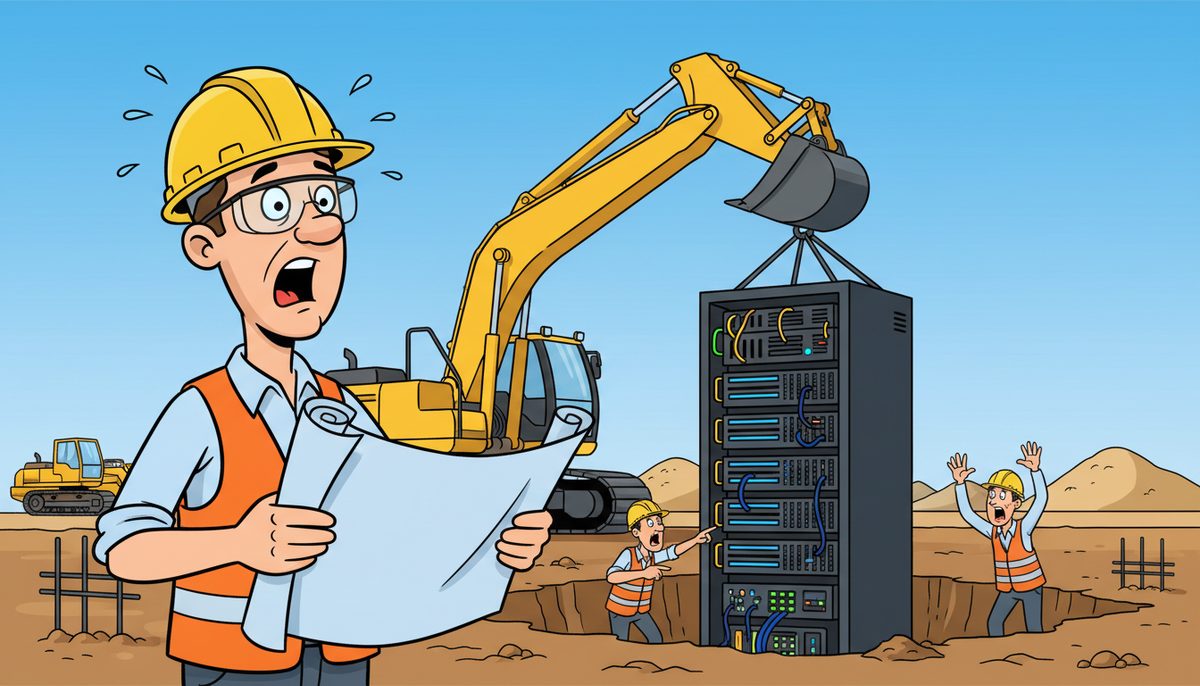
DataStream Networks doesn’t sell servers or storage hardware. Instead, you get management, protection, and recovery for the infrastructure you already own or purchase elsewhere. Backup services range from $25–$75 per device monthly for local backup to $100–$300 per device monthly for fully managed server backups with recovery testing, delivered by local Vancouver Island technicians who understand construction deadlines.
Why can’t I just buy a server and be done with it?
You’re juggling bids, coordinating subs, and managing job sites across the island. The last thing you need is another vendor relationship to manage when your server fails at 4 PM the day before a tender closes.
Buying hardware is the easy part. The real problem starts when that server crashes and your estimating software, project files, submittals, and as-builts become inaccessible. If the company that sold you the box doesn’t manage it daily, you’re stuck waiting for someone to diagnose whether it’s a hardware failure, a software corruption, or a ransomware attack—while your deadline ticks closer.
Your construction business faces a geography problem that makes hardware sales without ongoing management especially risky. When your server fails and you need parts or on-site help, mainland providers have to catch the ferry. That delay can mean missing a tender deadline or failing to deliver submittals when the GC needs them.
The villain here isn’t the hardware itself—it’s the gap between owning equipment and having it reliably managed when seconds count. A server sitting in your office in Duncan or a site office in Cobble Hill is only useful if someone can fix it fast when it breaks, and if your data is protected when disaster strikes.
What happens if your server fails and you don’t have local support managing it?
Picture this: It’s Tuesday afternoon and your estimating software won’t open. The tender closes Thursday at noon. Your project manager is trying to finalize the bid, but the files are on a server that won’t boot.
You call your IT provider. Voicemail. You try again. Phone tree. Eventually you reach someone who says they’ll look into it and call you back. An hour passes. Two hours. It’s now 5 PM and you still don’t know if this is fixable tonight or if you’re losing this bid.
Even if they diagnose it remotely, if the server needs hands-on repair or parts, you’re waiting for a mainland technician to catch the morning ferry. That’s tomorrow afternoon at the earliest—after your team has lost a full day of estimating work and you’re racing against the clock with no margin for error.
The real cost isn’t just the lost bid. It’s the damage to your reputation with the client who was counting on your number. It’s the subs you had lined up who now question your reliability. It’s the bonding company that sees another project coordination failure on your record.
Daryl Wood from a construction company on Vancouver Island put it plainly: “Considering all the cyber threats facing businesses today, you have to ask, what happens if your systems go down and you can’t operate for several days? If this would cause you big problems, I’d suggest protecting yourself by selecting DataStream as your security partner and get some peace of mind knowing they have it covered. If not, roll the dice. Problems will find you eventually.”
WorkSafeBC incident reporting has strict deadlines. The Builders Lien Act requires meticulous documentation with specific timelines. Progress billing cycles don’t pause because your server is down. When your infrastructure fails without fast local support, you’re not just losing productivity—you’re risking regulatory penalties and legal exposure.
Geography turns IT failures into business-threatening emergencies for island construction companies.
How do you protect your project files and estimating data without buying new hardware?
Your existing server, desktop computers, and file storage already hold everything critical to your business: bid documents, change orders, submittals, shop drawings, as-builts, daily reports, and RFIs. The question isn’t whether you need new hardware—it’s whether that data will be there when you need it.
Start with backup coverage that matches your risk. Local server backup ($25–$75 per device monthly) creates copies on separate hardware in your office, protecting against drive failures and accidental deletions. It’s fast to restore but vulnerable if fire, flood, or ransomware hits your building.
Cloud or offsite server backup ($40–$150 per device monthly) sends encrypted copies off the island entirely. When ransomware locks your files or a water leak destroys your server room, your data exists somewhere the disaster can’t reach. Recovery takes longer than local backup, but your business survives catastrophic loss.
Full managed server backups ($100–$300 per device monthly) combine both approaches with regular recovery testing. Testing matters because a backup you’ve never restored is just a theory. When the GC needs as-builts for a deficiency list and your server won’t boot, you need certainty that recovery works—not hope.
The key difference between buying backup software and having managed backup is who verifies it’s working. Software can fail silently for weeks. Managed backup means someone checks daily that your project files are actually being protected and can actually be recovered.
Construction companies typically need 3–5 devices backed up: the server, the estimator’s workstation, the PM’s computer, and the accounting system.
For field staff accessing drawings and daily reports from job sites around Victoria, Nanaimo, or rural areas with poor cellular connectivity, reliable remote access to your office systems matters more than the hardware itself. When your infrastructure is managed proactively, problems get fixed before they stop work.
What’s the difference between buying hardware and buying managed services?
When you buy a server, you own a box. When you buy managed services, you’re paying for uptime, data protection, and fast recovery when things break.
Hardware is a capital expense. You write a check, take delivery, and it’s yours. Managed services are an operational expense—monthly payments that include monitoring, maintenance, backup management, security updates, and fast response when problems happen.
The financial difference matters for construction companies with variable cash flow. A server purchase might cost $3,000–$8,000 upfront plus software licenses. Managed IT services ($150–$225 per user monthly) spread the cost over time and include everything: backup management, security protection, help desk access, and proactive monitoring that catches problems before they cause downtime.
More importantly, managed services shift the risk. When you own hardware without management, every failure is your emergency to solve. You’re finding the technician, waiting for diagnosis, sourcing parts, and hoping recovery works. When infrastructure is managed, the provider owns the outcome—your systems stay running, your data stays protected, and problems get fixed fast.
For construction companies on Vancouver Island, the geography factor makes this distinction critical. Owning hardware without local management means every failure triggers a ferry delay. Managed services with local Vancouver Island technicians in Victoria, Nanaimo, Duncan, and Cobble Hill mean someone can be on-site the same day when remote resolution isn’t enough.
The business question isn’t whether hardware or services cost less—it’s what happens to your bids, your project coordination, and your client relationships when technology fails and you’re alone versus when you have a local team managing it.
How does a local IT partner help without selling you hardware?
You know what it feels like when your estimating software crashes at 4 PM and the tender closes at noon tomorrow—watching the clock tick while wondering if help will arrive in time. You understand the panic when your project files are locked up by ransomware and you can’t access submittals, RFIs, or as-builts that the architect needs today.
Construction companies lose bids because their IT provider couldn’t get to the island fast enough to fix a server before the deadline. Field staff call from a job site saying they can’t access drawings or daily reports, and you have no idea when IT support will actually show up.
DataStream Networks started in 2012 serving Vancouver Island businesses. Live people answer phones with no voicemail, phone tree, or long wait times. Local Vancouver Island technicians in Victoria, Nanaimo, Duncan, and Cobble Hill—no outsourced tech overseas—fix most problems remotely within minutes. When remote resolution isn’t possible, a technician is automatically dispatched to your location.
Instead of selling you hardware and walking away, the company manages what you already own. Your server gets monitored daily. Your backups get tested regularly. Your security gets updated proactively. When something breaks, you call and talk to a real local technician immediately who understands construction deadlines and island geography.
Carrie Wong from a utilities company noted: “It’s always pleasure working with them. All of DataStream’s team is highly personable. Not only do they provide timely service but they are able to interpret my request and ensure all the related requirements are met as well. They are great at follow-up too!!”
The value isn’t in the hardware transaction—it’s in the relationship that keeps your technology running when contracts depend on it.
What’s the simple path to protecting your construction business technology?
- Call (250) 929-0745 and talk to a real local technician immediately about what infrastructure you currently have and what happens if it fails during a critical deadline—no voicemail or phone trees.
- Get an assessment of your backup coverage, security gaps, and recovery capability for the servers and workstations holding your bid documents, project files, and financial records.
- Choose managed protection that fits your risk: backup management starting at $25–$300 per device monthly, or full managed IT services at $150–$225 per user monthly with everything included—delivered by technicians who can be on-site anywhere on Vancouver Island the same day when needed.
What does success look like for your construction business?
You submit every bid on time with confidence, knowing your estimating software and project files are protected and accessible even during critical deadlines. You coordinate seamlessly between island job sites, mainland suppliers, and clients with reliable remote access that works even when cellular connectivity fails.
You sleep soundly knowing your bid documents, submittals, shop drawings, and as-builts are backed up and recoverable if disaster strikes. You keep projects on schedule with field staff who can access daily reports and RFIs from any job site without technology delays.
When something does break—and technology always breaks eventually—you call and reach a real person immediately. Most problems get fixed remotely within minutes. If hands-on help is needed, a local technician arrives the same day without waiting for the ferry.
Your bonding capacity stays strong because you’re not missing deadlines or losing project documentation. Your relationships with GCs, architects, and subs stay solid because you deliver submittals, RFIs, and as-builts on their timeline every time. Your WorkSafeBC reporting stays compliant because system failures don’t prevent you from meeting regulatory deadlines.
You focus on winning bids, managing job sites, and growing your construction business—not worrying whether your technology will be there when you need it.
If you’re tired of watching the clock during IT emergencies while mainland help catches the ferry, call (250) 929-0745 to talk to a real technician now. Or learn more about how managed IT services protect construction companies across Victoria, Nanaimo, and Duncan with local support that understands your deadlines.
Frequently asked questions
Can I just buy a server from you and manage it myself?
DataStream Networks doesn’t sell servers or storage hardware—the company manages and protects the infrastructure you already own or purchase elsewhere. This focus lets them deliver faster response, better backup management, and proactive monitoring without the conflict of interest that comes from selling hardware. You’re free to buy equipment from any vendor, and they’ll manage it with local Vancouver Island support starting at $25–$300 per device monthly.
What if I already have a server but no backup or IT support?
Your existing infrastructure gets assessed and the protection it needs gets added: backup coverage starting at $25–$75 monthly per device for local backup, $40–$150 monthly for cloud backup, or $100–$300 monthly for fully managed backups with recovery testing. Most construction companies need 3–5 devices backed up. The approach works with what you have rather than forcing hardware replacement.
How fast can you respond if my server fails before a tender deadline?
Live people answer phones immediately with no voicemail or phone trees. Most problems get diagnosed and fixed remotely within minutes. If hands-on help is needed, local Vancouver Island technicians in Victoria, Nanaimo, Duncan, and Cobble Hill can be on-site the same day—no waiting for mainland help to catch the ferry when your deadline is at stake.
Do I need to replace my old server to get managed IT services?
Not necessarily. Your existing server gets assessed to determine whether it can reliably support your estimating software, project files, and business operations with proper management and backup protection. If replacement makes sense for reliability or capacity, you’ll get an honest recommendation—but many construction companies get years more life from existing hardware with proactive management, monitoring, and data protection.
What’s included in managed IT services versus just backup?
Backup services ($25–$300 per device monthly) protect your data with regular copies, monitoring, and recovery testing. Managed IT services ($150–$225 per user monthly) include backup plus help desk access, security protection, proactive monitoring, software updates, remote support, and automatic on-site dispatch—everything needed to keep your technology running reliably. For construction companies, managed services mean one call fixes any technology problem affecting bids or project coordination.