
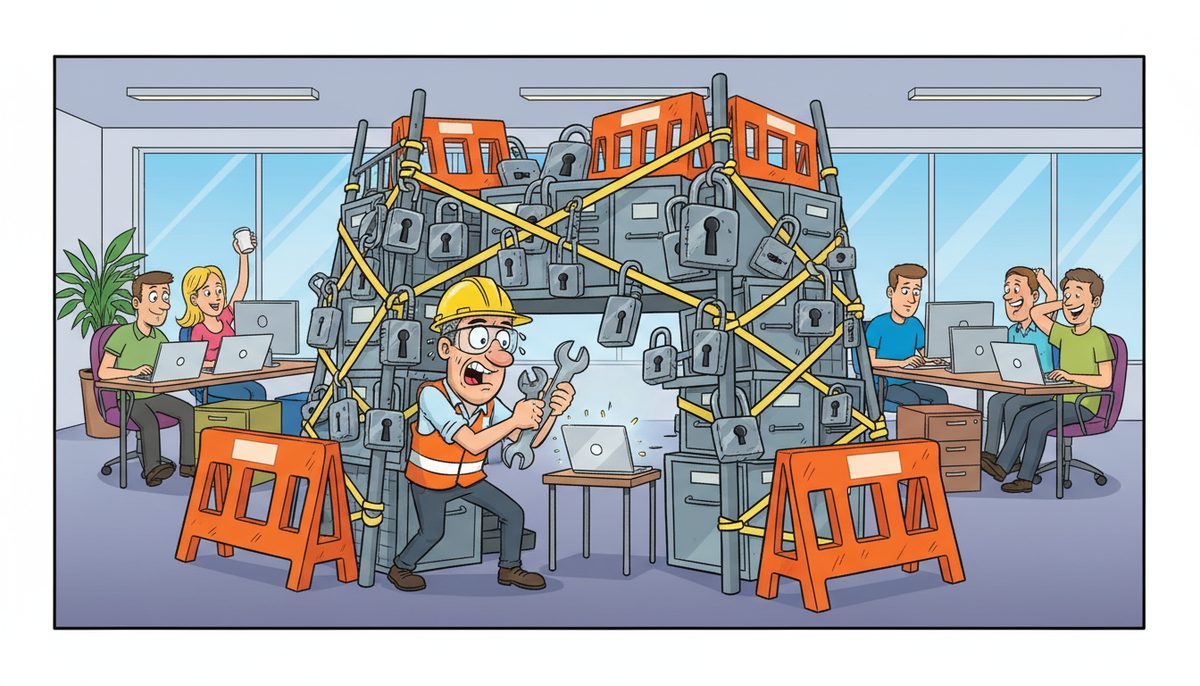
Your engineering firm must implement 10 PIPEDA safeguards: consent mechanisms, purpose documentation, limited collection, accuracy procedures, retention policies, encryption for data in transit and at rest, access controls, breach notification protocols within 72 hours, accountability documentation, and individual access procedures. Non-compliance risks fines up to $100,000 per violation.
What personal information does PIPEDA cover in engineering firms?
PIPEDA applies to any information about an identifiable individual that your engineering firm collects during projects. This includes client contact details, property owner information gathered during site assessments, employee records, and subconsultant data.
Your CAD files and BIM models often contain more personal information than you realize. When you embed property owner names in drawing title blocks, include homeowner contact details in site plans, or reference individual stakeholders in environmental assessment reports, you’re handling personal information under federal privacy law.
Project correspondence creates another layer of exposure. Every email thread with municipal staff, RFI responses naming specific individuals, and submittal logs containing contractor contact information falls under PIPEDA’s scope when you’re working on private sector projects.
The distinction matters because PIPEDA governs private sector work while FIPPA covers public sector contracts in BC. When your Victoria firm designs a private commercial building, PIPEDA applies. When you’re the prime consultant on a municipal infrastructure project, FIPPA takes precedence for government-held records.
PIPEDA requires you to know exactly what personal information you hold, where it lives across your network, and who can access it.
Why do engineering firms struggle with PIPEDA compliance?
The villain isn’t the regulation itself—it’s the scattered, uncontrolled way project data accumulates across your firm. Engineers save files to local workstations, email drawings to subconsultants from personal devices, and store client information wherever it’s convenient during deadline crunches.
You feel the anxiety most acutely when a client asks what personal information you hold about them and you realize project files are scattered across three servers, two cloud storage accounts, and a dozen engineer laptops. EGBC requires you to maintain project records for years, but PIPEDA demands you know where every piece of personal information lives and can produce or delete it on request.
The philosophical problem is deeper: your firm built its workflows around project delivery and technical excellence, not data governance. Your systems evolved to move large CAD files quickly and enable collaboration, not to track personal information or enforce retention policies.
Geography compounds the challenge on Vancouver Island. When your engineers work on remote infrastructure projects—forestry roads in the Cowichan Valley, marine facilities in coastal communities—they need offline access to project files. That means personal information travels on laptops to job sites without consistent encryption or access controls.
Melissa from a manufacturing client described the breaking point many firms reach: “Since switching to DataStream, we’ve experienced a much more professional approach to our IT solutions. The responses are quick, and the technicians are always friendly and helpful. What sets DataStream apart from other IT firms we’ve worked with is their ability to truly understand our needs and priorities.”
The pattern repeats: you realize your current IT setup can’t answer basic PIPEDA questions about where data lives, who accessed it, or when it was last backed up.
What happens if your engineering firm fails a PIPEDA audit?
The Privacy Commissioner of Canada can fine your firm up to $100,000 per violation. But the financial penalty is rarely the worst consequence for engineering firms.
You lose public sector contracts when RFP requirements demand documented privacy compliance and you can’t produce evidence of PIPEDA safeguards. Municipal and provincial clients increasingly require prime consultants to demonstrate data protection capabilities before awarding design-build or infrastructure projects.
Professional liability exposure escalates when client data breaches occur. Your errors and omissions insurance may not cover privacy violations, leaving your firm personally liable when a laptop containing property owner information is stolen from a job site or when subconsultants access files they shouldn’t see.
Reputation damage spreads quickly in Vancouver Island’s tight engineering community. When word gets out that your firm lost environmental assessment data containing landowner details or failed to secure stamped drawings with client information, potential clients choose mainland competitors who can demonstrate compliance.
Engineering firms face average breach costs of $4.88 million globally when personal information is compromised, according to IBM’s 2023 Cost of a Data Breach Report.
The operational disruption hits hardest during investigations. When the Privacy Commissioner launches an inquiry, your engineers spend billable hours reconstructing data flows, documenting access logs, and explaining why personal information ended up in unexpected places instead of delivering project milestones.
EGBC disciplinary action becomes possible when privacy failures affect your professional practice or record-keeping obligations, putting individual P.Eng. licenses at risk alongside firm reputation.
How do you implement the 10 PIPEDA safeguards in your engineering practice?
Start with consent and purpose documentation. Before collecting property owner information during site assessments or client contact details in project intake, document why you need it and how you’ll use it. Your project proposal templates should include privacy notices explaining data collection purposes.
Limit collection to what you actually need for project delivery. If you’re designing a commercial building, you need the building owner’s contact information—you don’t need personal details about every tenant unless they’re directly involved in the design process.
Implement accuracy procedures that let clients and stakeholders correct their information. When a property owner’s contact details change mid-project, you need a documented process to update records across all systems where that information appears.
Retention policies require technical enforcement, not just written guidelines. Your network must automatically delete project files containing personal information after EGBC’s required retention period expires unless specific legal holds apply.
Encryption protects data in transit and at rest. When your structural engineer emails stamped drawings containing client information to a contractor, that transmission needs encryption. When those same drawings sit on your file server, the storage must be encrypted.
Access controls mean role-based permissions tied to project involvement. Your electrical engineering team shouldn’t access civil project files containing unrelated client information just because everything lives on the same server.
Breach notification protocols must trigger within 72 hours of discovering that personal information was compromised. This requires monitoring systems that alert you when unauthorized access occurs or when laptops containing project data go missing.
Accountability documentation proves compliance. You need logs showing who accessed which files, when backups ran, what data was deleted, and how you responded to access requests—all timestamped and tamper-proof.
Individual access procedures let people request what personal information you hold about them. When a property owner from last year’s environmental assessment asks what data you still have, you must produce a complete answer within 30 days.
Third-party agreements extend PIPEDA obligations to subconsultants and cloud service providers. When you share BIM models with mechanical engineers or store drawings in cloud collaboration platforms, contracts must specify how they’ll protect personal information.
These safeguards require IT infrastructure that most engineering firms don’t have: centralized file storage with granular permissions, automated backup with retention enforcement, encryption for laptops and email, access logging, and secure collaboration tools for subconsultant coordination.
What IT systems do PIPEDA-compliant engineering firms actually use?
Centralized file servers with role-based access control form the foundation. Your CAD files, BIM models, specifications, and correspondence must live in one location where permissions can be enforced based on project involvement and role.
Automated backup systems with encryption and retention policies protect against data loss while enforcing PIPEDA requirements. Your backups need to retain project files for EGBC’s required period, then automatically delete them to comply with data minimization principles.
Endpoint encryption secures laptops that travel to job sites. When your engineers visit remote infrastructure projects on Vancouver Island with project files containing personal information, full-disk encryption prevents breaches if devices are lost or stolen.
Email encryption and archiving systems protect correspondence containing client information. Your RFI responses, submittal transmittals, and change order discussions often include personal details that need protection in transit and compliant retention.
Access logging and monitoring tools create the audit trail PIPEDA demands. You need timestamped records of who opened which files, when data was copied to external drives, and what information was emailed outside your firm.
Secure collaboration platforms replace consumer tools like personal Dropbox accounts. When you share drawing sets with subconsultants or review models with clients, the platform must enforce access controls and log all activity.
Mobile device management secures smartphones and tablets that access project data. When engineers check email containing client information or review drawings on iPads at job sites, those devices need encryption and remote wipe capabilities.
Data loss prevention systems prevent accidental exposure. If an engineer tries to email an unencrypted file containing personal information to a personal account or upload project data to an unapproved cloud service, the system blocks the action.
The challenge for Vancouver Island engineering firms is implementing these systems without disrupting project delivery or requiring engineers to become IT experts.
How does a local IT partner help engineering firms meet PIPEDA requirements?
You know what it feels like when you’re preparing a tender response and suddenly wonder whether your current IT setup could survive a Privacy Commissioner audit. The anxiety of realizing you can’t quickly answer where all client data lives or who accessed it creates the same deadline pressure you feel when CAD workstations crash before submission deadlines.
The frustration hits when mainland IT providers suggest compliance solutions that don’t account for how your firm actually works—the large file sizes, the need for remote access during site visits, the collaboration with subconsultants, and the reality that your engineers need to focus on design work, not data governance policies.
A local IT partner who understands both PIPEDA’s technical requirements and how engineering firms deliver projects under deadline pressure makes the difference. When you call about PIPEDA compliance, you talk to a real technician immediately—no voicemail or phone trees—who understands the difference between protecting CAD files and implementing privacy safeguards.
The right approach starts with where your data actually lives today—not where a textbook says it should be—then builds compliant systems around your existing workflows instead of forcing you to abandon tools your engineers rely on. You need file servers that handle massive BIM models while enforcing granular access controls, backup systems that protect project deliverables while implementing retention policies, and encryption that secures laptops traveling to remote job sites without slowing down rendering or 3D modeling.
Three steps to PIPEDA compliance for your engineering firm
- Call (250) 929-0745 to talk to a real local technician about your current systems, project workflows, and where client data lives across your network—identify gaps in your PIPEDA safeguards during that first conversation.
- Get a remote assessment of your file storage, backup systems, access controls, and collaboration tools, then receive a specific compliance roadmap with the IT infrastructure changes your firm needs and what each component costs.
- Implement the systems in phases that don’t disrupt active projects, train your engineers on compliant workflows, and get ongoing support so PIPEDA compliance becomes automatic rather than a constant worry.
What does success look like for PIPEDA-compliant engineering firms?
You respond to RFPs requiring privacy compliance documentation with confidence, knowing you can produce evidence of all 10 PIPEDA safeguards and demonstrate how your IT systems protect client information throughout the project lifecycle.
Your engineers focus on design work and project delivery instead of worrying about data governance. Your systems enforce retention policies, access controls, and encryption automatically—compliance happens in the background without requiring engineers to become privacy experts.
When clients or property owners request access to their personal information, you produce complete answers within days instead of weeks because your centralized systems know exactly where data lives and who accessed it.
You win more public sector contracts because municipal and provincial clients see documented privacy capabilities that mainland competitors can’t match. Your compliance becomes a competitive advantage rather than a checkbox exercise.
Professional liability exposure decreases because your systems prevent the data breaches and privacy violations that trigger claims. Your errors and omissions insurance premiums reflect lower risk when underwriters see documented safeguards.
You sleep soundly knowing that if a laptop is stolen from a job site or a subconsultant requests inappropriate file access, your systems have already prevented the breach through encryption and access controls rather than forcing you to report incidents to the Privacy Commissioner.
Call (250) 929-0745 to talk to a real technician about implementing PIPEDA-compliant IT systems that protect your engineering firm without disrupting project delivery. Or visit our managed IT services page to see how Vancouver Island businesses build compliant infrastructure around their actual workflows.
Frequently asked questions
Does PIPEDA apply to engineering firms working on public sector projects?
PIPEDA governs private sector client data, while BC’s Freedom of Information and Protection of Privacy Act (FIPPA) applies to public sector project records. Your firm typically operates under both regimes: PIPEDA for private commercial clients and employee data, FIPPA for municipal and provincial contracts. Your IT systems must accommodate both frameworks, with particular attention to segregating public sector records subject to FIPPA access requests from private sector data protected under PIPEDA.
What are the penalties for PIPEDA violations in engineering firms?
The Privacy Commissioner of Canada can impose fines up to $100,000 per violation for PIPEDA non-compliance. Beyond financial penalties, your firm faces contract losses when RFPs require privacy compliance documentation, professional liability claims when breaches occur, potential EGBC disciplinary action affecting professional practice, and reputation damage in Vancouver Island’s tight engineering community. Breach notification failures carry separate penalties, and class-action lawsuits from affected individuals can exceed regulatory fines substantially.
How long must engineering firms retain client data under PIPEDA?
PIPEDA requires you to retain personal information only as long as necessary for identified purposes, then securely delete it. However, EGBC mandates engineers retain project records for minimum periods (typically 10 years for building projects). Your retention policy must balance EGBC’s professional requirements with PIPEDA’s data minimization principle: keep project files for regulatory compliance periods, but delete personal information that’s no longer necessary for those purposes. Technical systems should automate deletion after retention periods expire.
Do subconsultants need separate PIPEDA agreements?
Yes, PIPEDA requires written agreements when you share personal information with subconsultants or cloud service providers. When you send BIM models to mechanical engineers or upload drawings to collaboration platforms, contracts must specify how third parties will protect personal information, limit its use to project purposes, implement comparable safeguards, and return or delete data when projects complete. As prime consultant, you remain accountable for subconsultants’ privacy practices. Your IT systems should enforce these agreements through access controls and activity logging.
What IT budget do engineering firms need for PIPEDA compliance?
PIPEDA compliance costs vary based on your firm size and current infrastructure gaps. A gap analysis or readiness assessment typically costs $2,500–$10,000 to identify specific requirements. Ongoing managed IT services including compliant file storage, encrypted backups, access controls, and monitoring range from $150–$225 per user monthly. Cybersecurity suites with encryption and data loss prevention cost $40–$100 per device monthly. Policy and documentation development runs $1,500–$7,500 as a one-time project. Most Vancouver Island engineering firms find comprehensive managed services more cost-effective than building internal compliance capabilities.
Can engineering firms use cloud storage and remain PIPEDA compliant?
Yes, cloud storage can be PIPEDA-compliant if you choose providers with appropriate safeguards and execute proper agreements. PIPEDA doesn’t prohibit cloud services but requires you to ensure comparable protection regardless of where data is stored or processed. Your cloud provider agreements must specify Canadian data residency (or document cross-border transfer safeguards), encryption standards, access controls, breach notification procedures, and data return/deletion protocols. Consumer cloud services like personal Dropbox accounts typically lack required safeguards and audit trails for engineering firm compliance.